
Overview
- Quick Crash Course in Hamstring Anatomy
- Differentiating Strains and Tendinopathies
- Rehab Direction
- Getting Back to Classes and Rehearsals
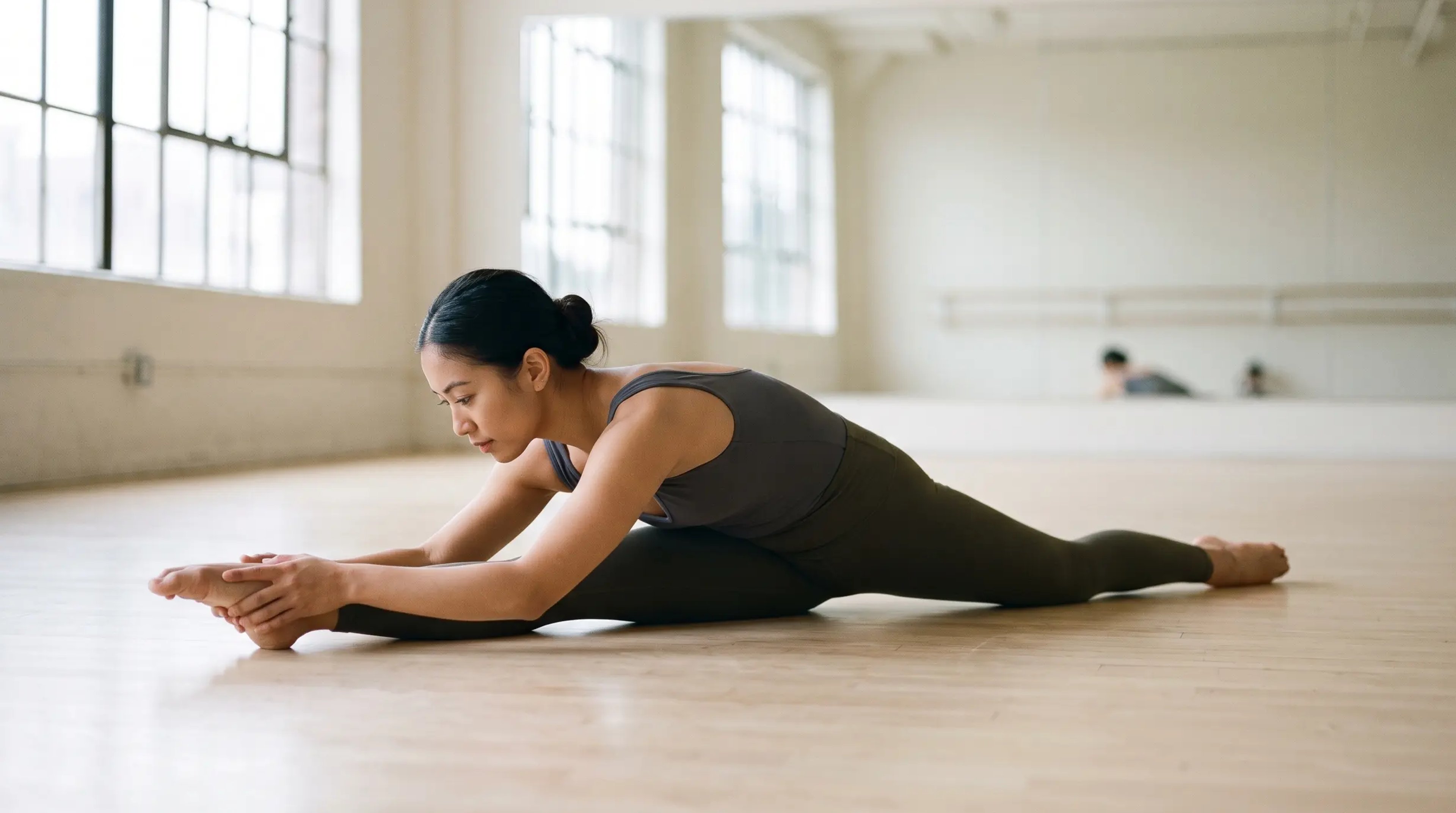
High hamstring pain in dancers usually sits right at the sit bones, where the hamstring tendon anchors to the pelvis, and it flares under the two things dance asks for at once: length and load. If the back of your thigh, close to where you sit, has started complaining after kicks or deep stretches, eases once you warm up, then nags again after class, that pattern points to a high hamstring injury.
The complaints we hear most:
- Pain low in the back of the thigh, just under the buttock, dropping into front splits
- Pain in forward folds during warm-up
- Relief after stretching that fades, with soreness creeping back once class is over
- A restricted, held-back feeling in kicks
Two questions decide how this gets rehabbed. Which part of the hamstring is injured, and what movement caused it, because that tells us what to rebuild so the same movement doesn't re-injure you later. And whether it's a strain or a tendinopathy, because the two heal in different directions. Here's what this covers: hamstring anatomy, how strains and tendinopathies differ, the rehab direction for each, and how to bridge back to class and rehearsal.
1. Quick Crash Course in Hamstring Anatomy
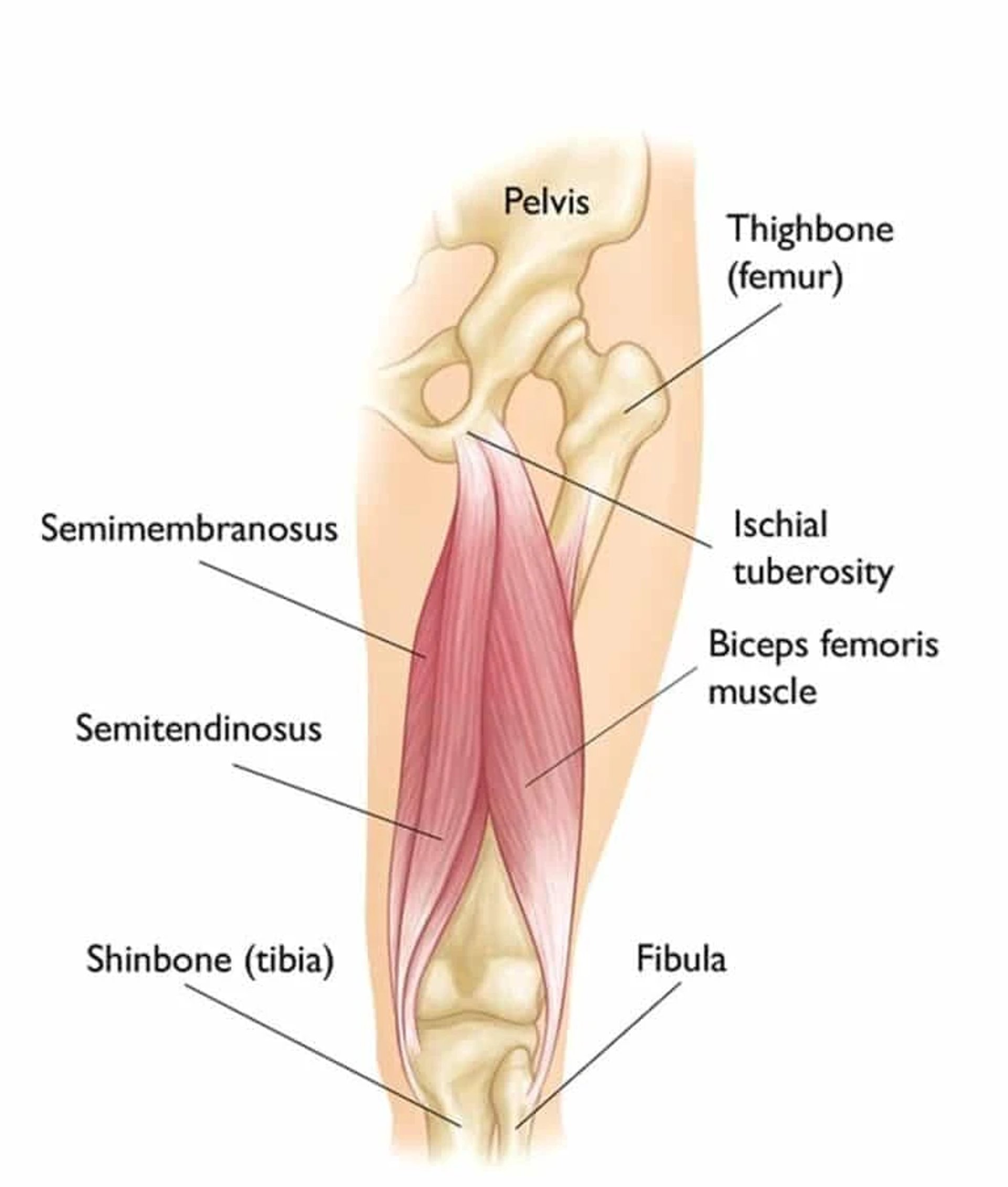
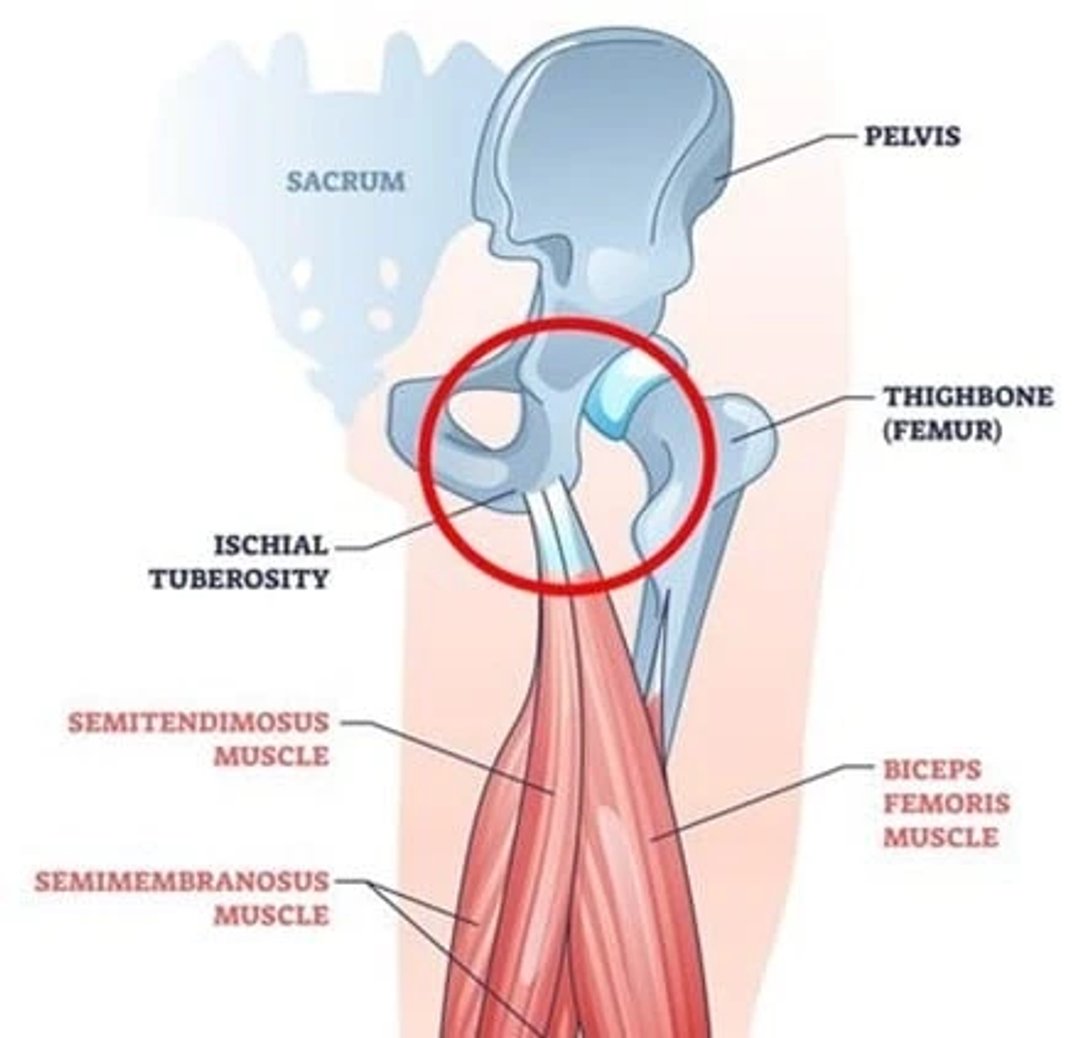
The hamstrings run from the sit bones down to below the knee, and they do two jobs: bending the knee, which is their main role, and extending the hip. They start at the ischial tuberosity, the bony point you sit on, which is exactly where a high hamstring injury tends to hurt. From there they cross the back of the thigh and attach below the knee, semimembranosus and semitendinosus on the inner side at the medial tibial condyle, and biceps femoris on the outer side at the fibular head. That anchor at the sit bone sits under the most tension when you fold into a split or hold a penche, which is why the pain settles there rather than lower down.
2. Differentiating Strains and Tendinopathies
A strain is damage to the muscle fibers themselves, from mechanical stress the tissue couldn't absorb, either too much load or a sudden stretch beyond what the muscle was ready for. In dancers it shows up most in front splits training, where the hamstring is taken to full length, and in penche kicks, where it has to produce strength while already lengthened.
A tendinopathy is pain and altered function in the tendon, the tissue that connects muscle to bone, and it ties to a specific movement or activity rather than a single moment of injury. A healthy tendon absorbs tensile force, stores and returns energy like a spring, and holds up under repeated load as long as that load is matched by enough recovery. When the demand outpaces the recovery, the tendon stops adapting and starts complaining.
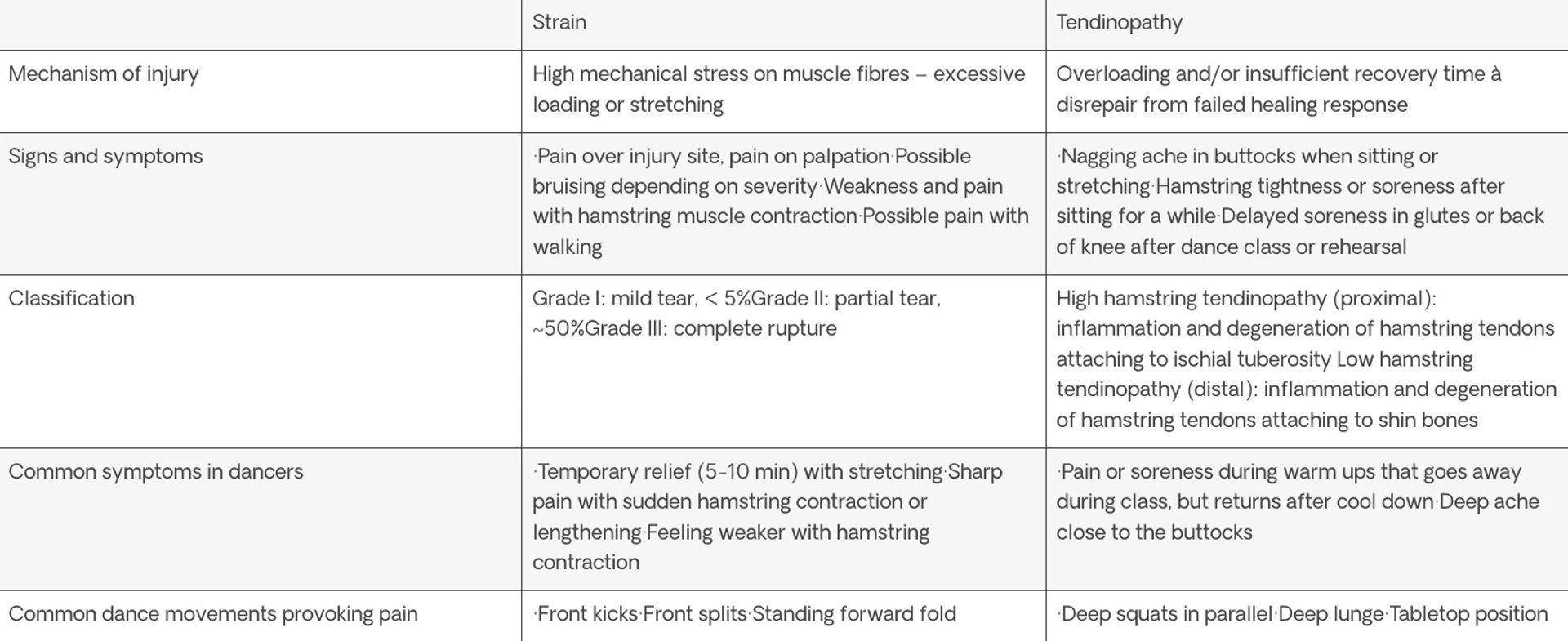
The stretch that feels good in the moment is often loading a tendon that needs strengthening rather than lengthening, which is why the relief never lasts.
3. Rehab Direction
The strain-or-tendinopathy answer sets the whole direction here. For a strain, rehab climbs through stages: it starts with settling the injured muscle, using isometric holds to calm pain and load gently, then builds into heavy, slow strengthening through controlled ranges with hamstring bridging as the staple.
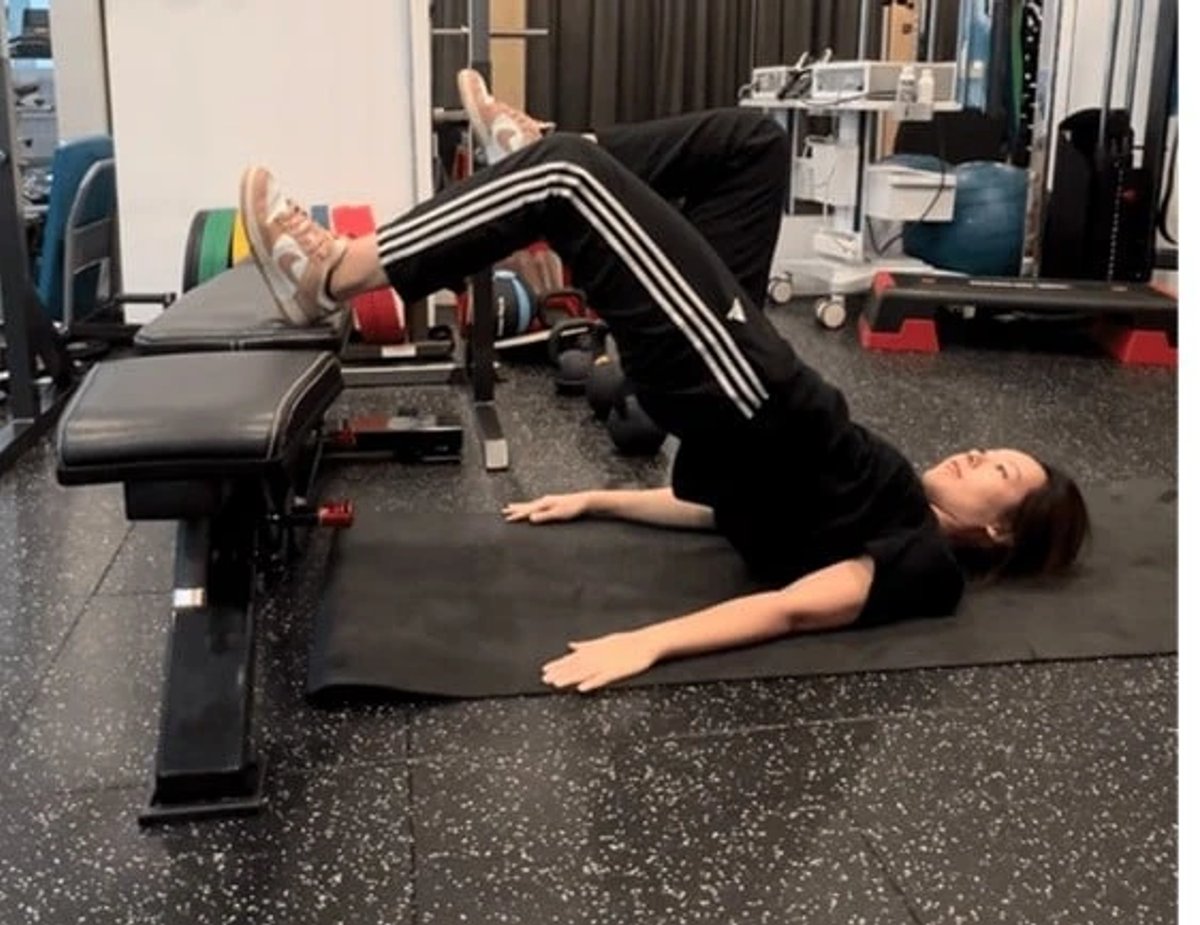
The late stage adds eccentric strength, then power and speed, so the muscle can handle fast, forceful lengthening again: Romanian deadlifts for the eccentric work, bridges with a jump for plyometric load.
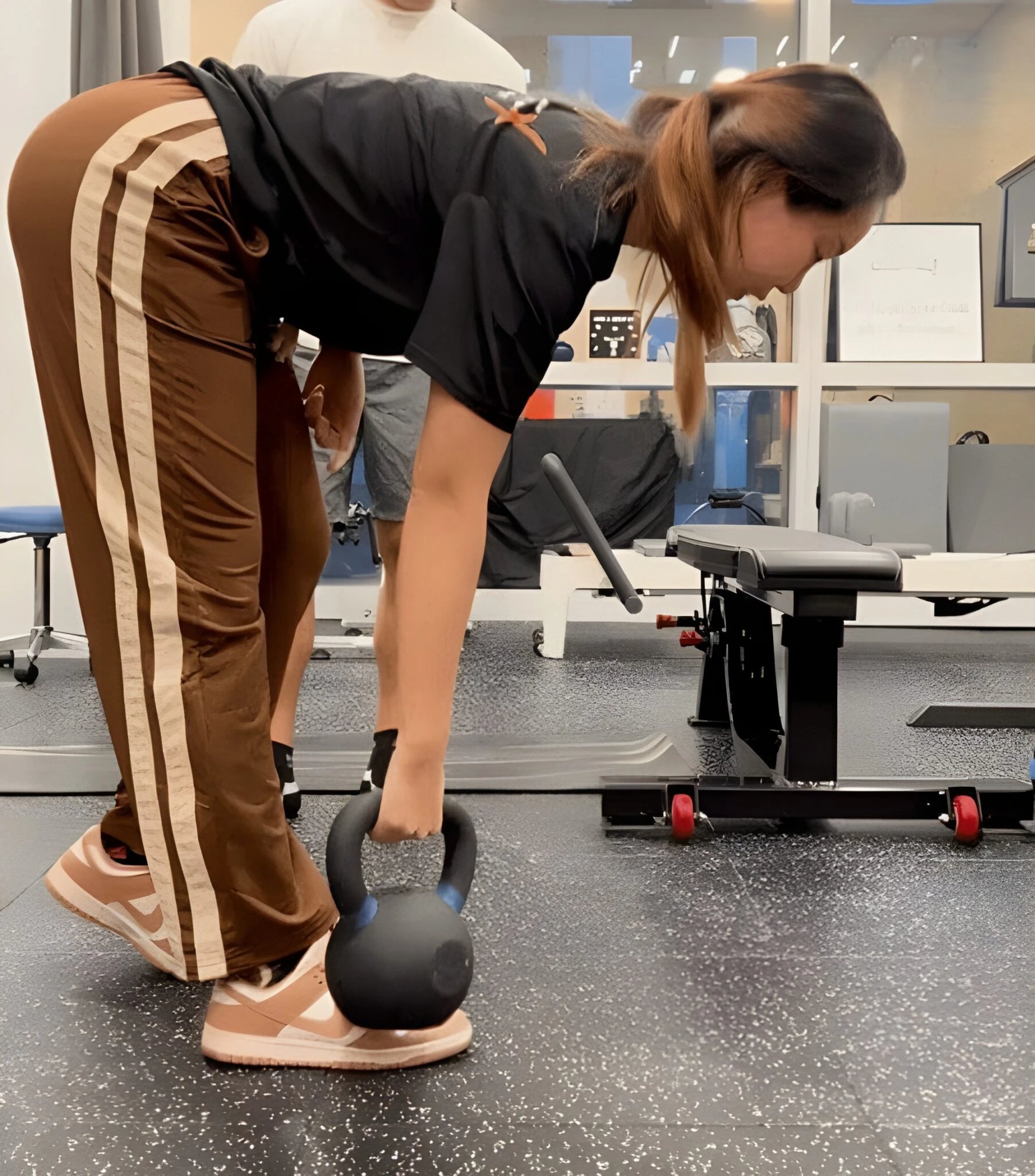
The whole build has to progress toward the movement that caused the injury, and the final stage folds dance-specific movement back in, including strength at end range, so the hamstring is challenged the way performance will challenge it.
For a tendinopathy, the sequence is similar in spirit but paced around the tendon. Isometrics and eccentric strengthening promote healing first, then progressive overload rebuilds capacity, and only once the tendon has healed enough do you reintroduce plyometrics for elasticity. Loading elasticity onto a tendon that isn't ready is how these injuries linger. The move from gym strength back to dance has to be graded carefully, enough to challenge the tendon, never so much that it tips back into overload.
4. Getting Back to Classes and Rehearsals
Getting stage-ready means looking at the movements your genre actually demands and breaking each one down into what it asks of the hamstring: length, strength, or strength in a lengthened position. The quickest way to find your gap is to test length against strength directly. If you can sink into a hamstring stretch but can't hold a penche, the limiter is strength in a lengthened position rather than range. If your Romanian deadlift range is generous but you still can't reach a flat grand jete, then range is the thing you're missing.
Some movement examples are:
Contemporary dance
- Tabletop warm ups (strength in a lengthened position)
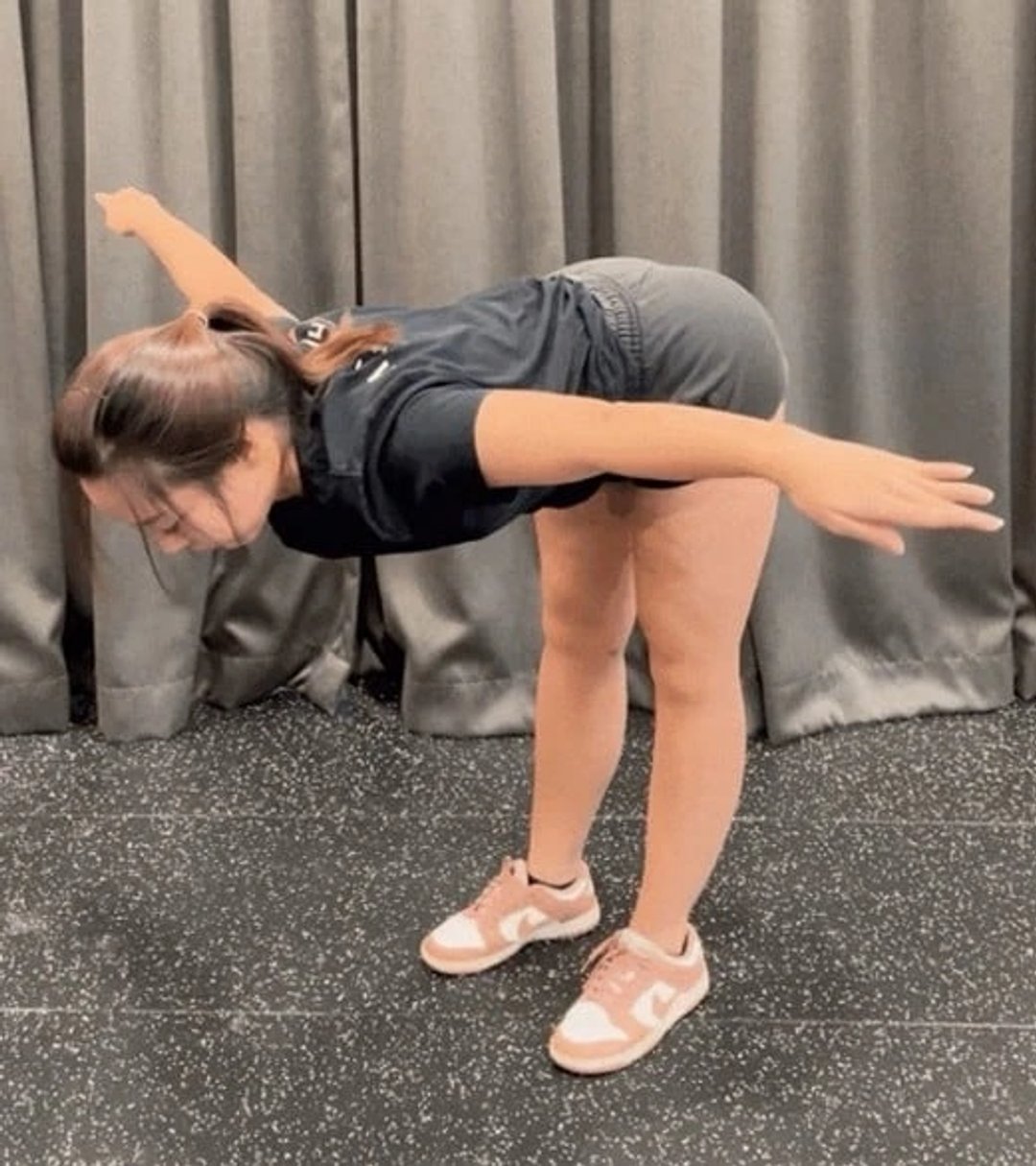
- Illusion kicks (supporting leg – strength in a lengthened position)
Ballet
- Arabesque penche (supporting leg – strength in a lengthened position)
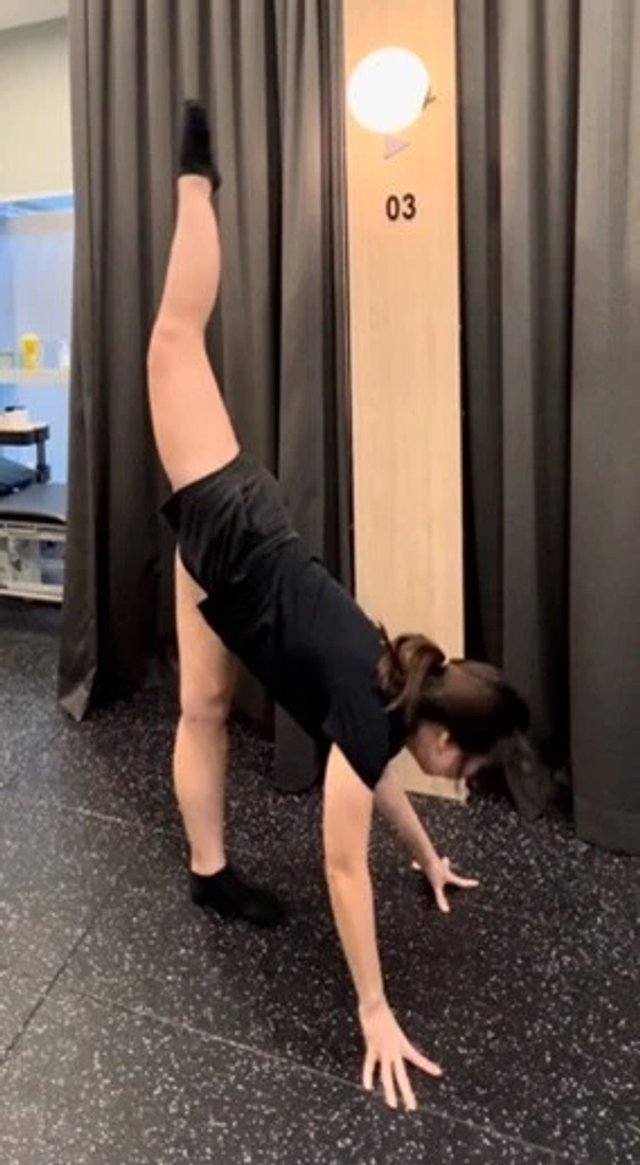
- Grand jete (front leg – length during high point of jete, eccentric strength when landing)
Jazz
- High kicks (working leg – length to kick, strength for fast descent)
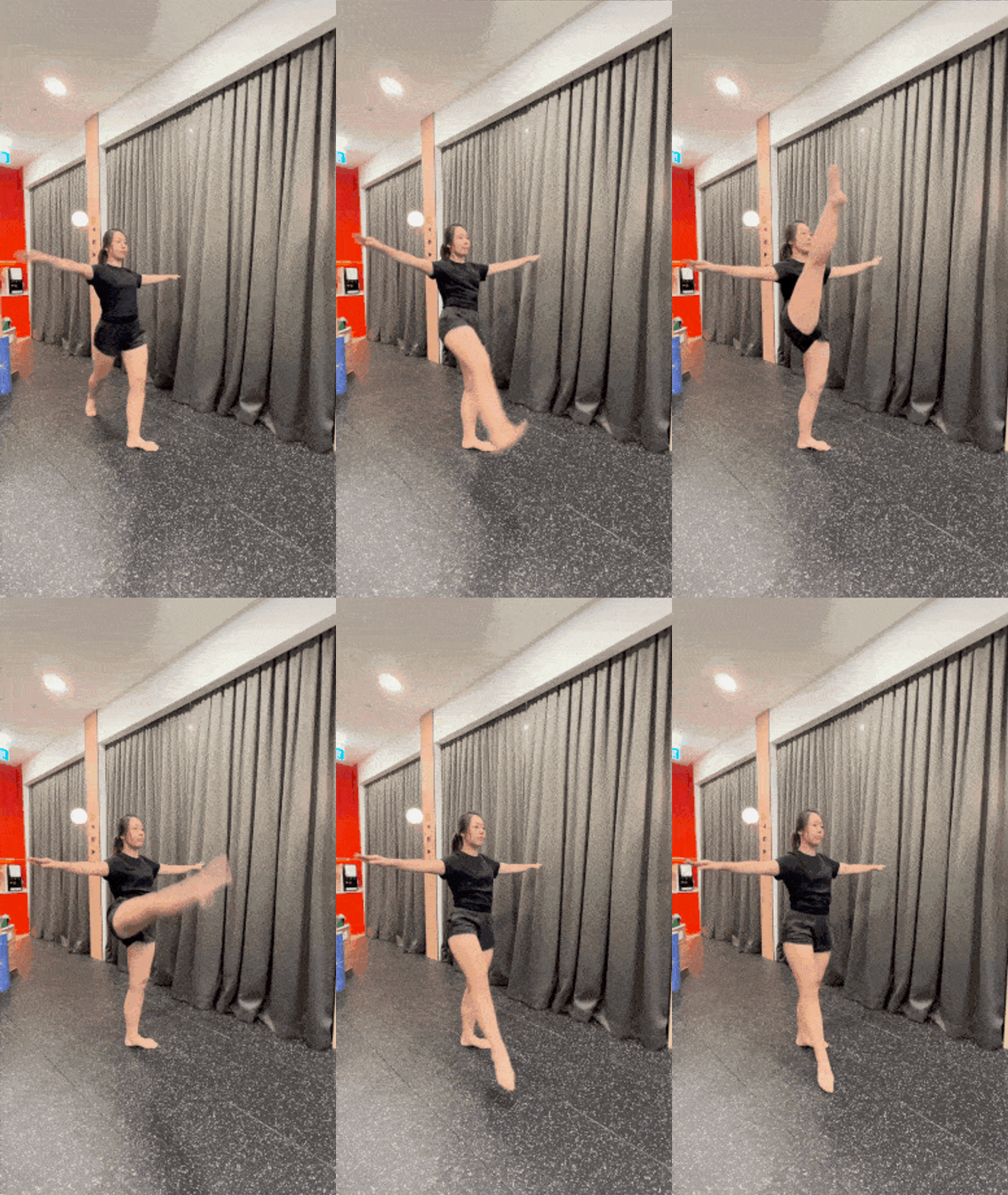
- Penche kicks (supporting leg – strength in a lengthened position)
Hip hop
- Quick weight shifts, pivots (working leg – quick deceleration)
Three things round out the return alongside the dance-specific work:
- Endurance. Build enough muscular endurance to hold up through a full class or rehearsal, not just a single combination.
- The surrounding muscles. Glutes, quads, and calves all share the load around the hip and knee, and a weak link anywhere pushes more onto the hamstring.
- Both roles. Train the hamstring as a supporting leg and as a working leg, since each asks something different of it.
The Bottom Line
High hamstring pain in dancers is a length-and-load problem, and it responds to the right kind of loading far better than to more stretching. The first job is knowing whether you are dealing with a strain or a tendinopathy, because that decides which direction the rehab goes.
If you just want to know whether physio can help with this, our hamstring injury page covers that in two minutes. If you want eyes on the injury and a clear read on whether it's a strain or a tendinopathy, you can book in with one of our physiotherapists below: