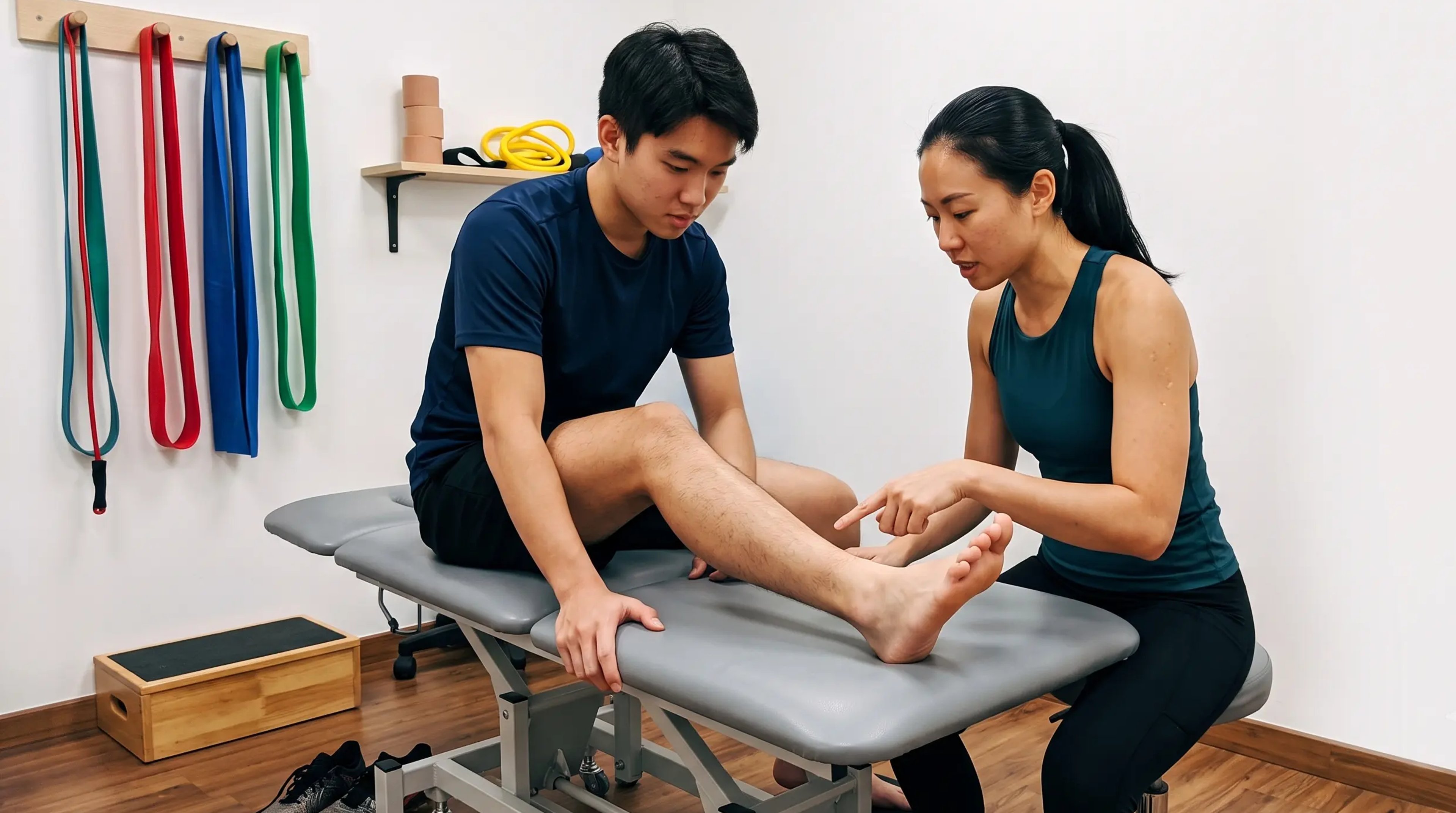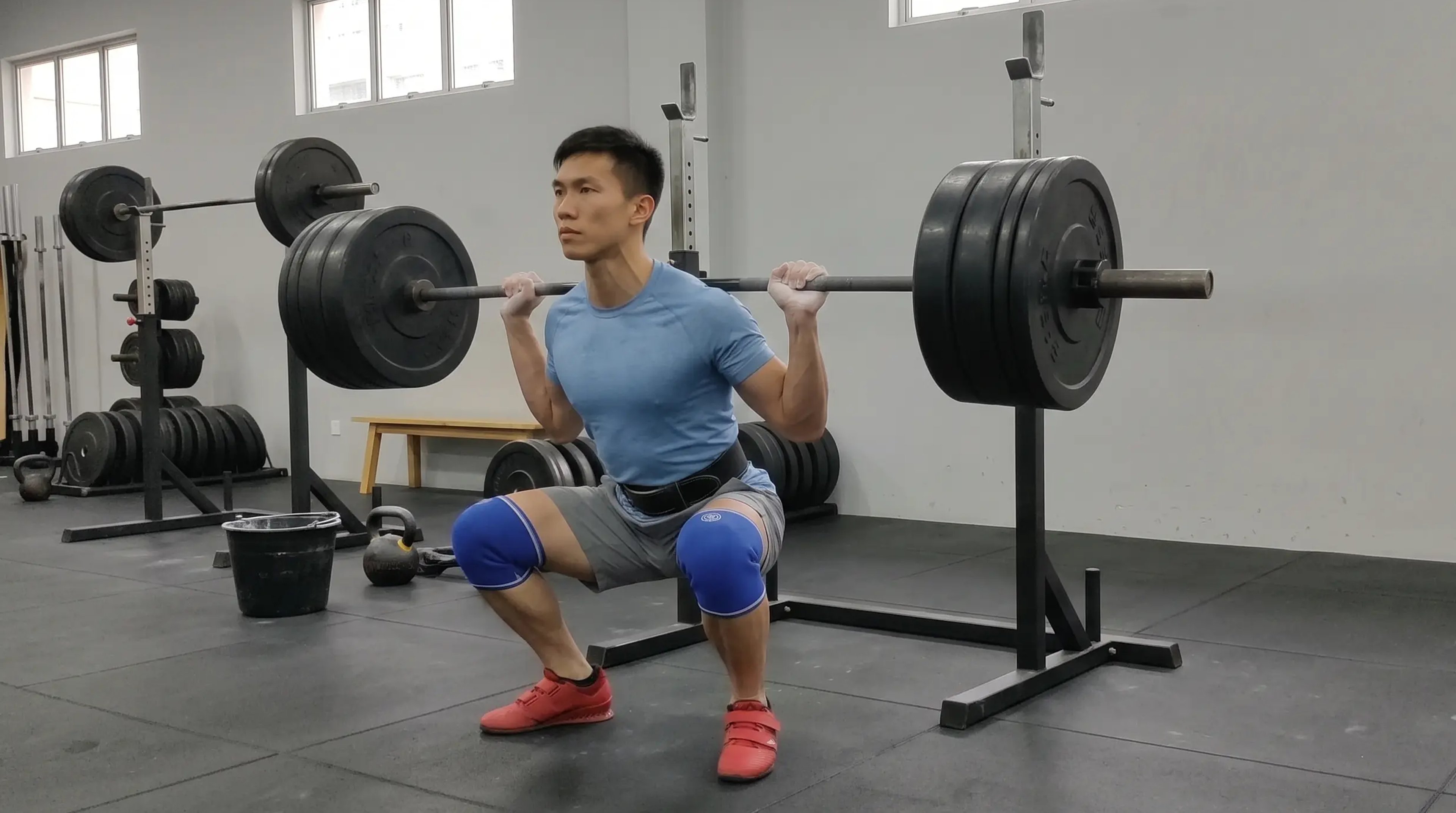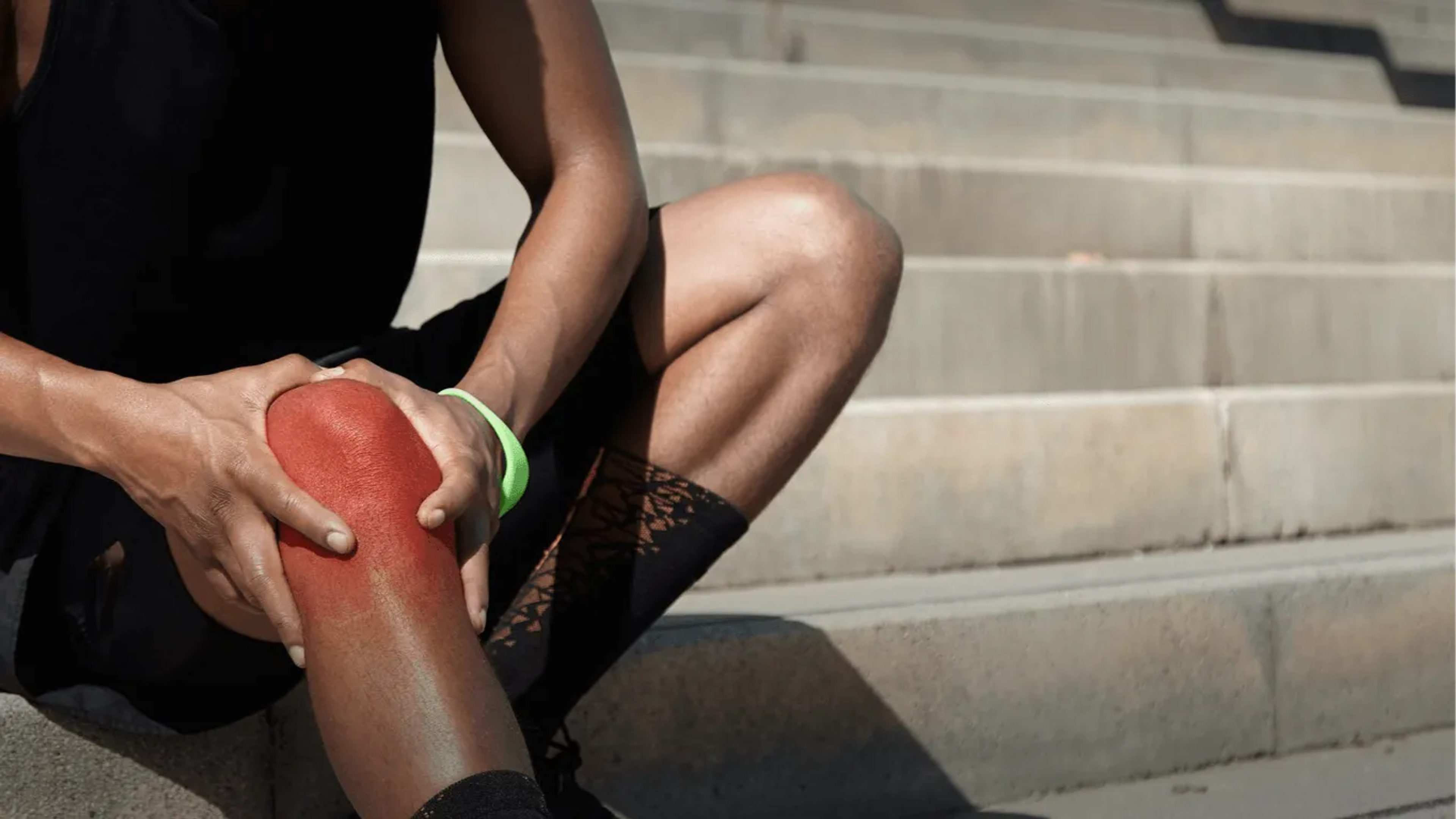

A muscle strain is a load problem: the force through the muscle exceeded what the tissue could withstand, and fibres tore, usually close to where muscle becomes tendon. It grabbed mid sprint or mid set, it hurts to train, and stretching only helps for a few minutes. So do you book in, or wait and hope it settles over the next few days?
How Do Strains Happen?
Strains happen during fast, lengthened contractions, because that's when the muscle-tendon junction takes the highest stress. A sprint acceleration, a heavy eccentric, a kick, an aggressive stretch: the pattern is the same, a demand the tissue wasn't prepared for. That matters for rehab, because the fix isn't avoiding the movement that caused it. The fix is rebuilding the muscle's capacity until that movement is comfortably within what it can handle.
Symptoms of Muscle Strain
Common symptoms of a strained muscle are:
- Localised pain and/or tenderness
- Possible bruising
- Weakness
- Muscle tightness that is not improved with stretching
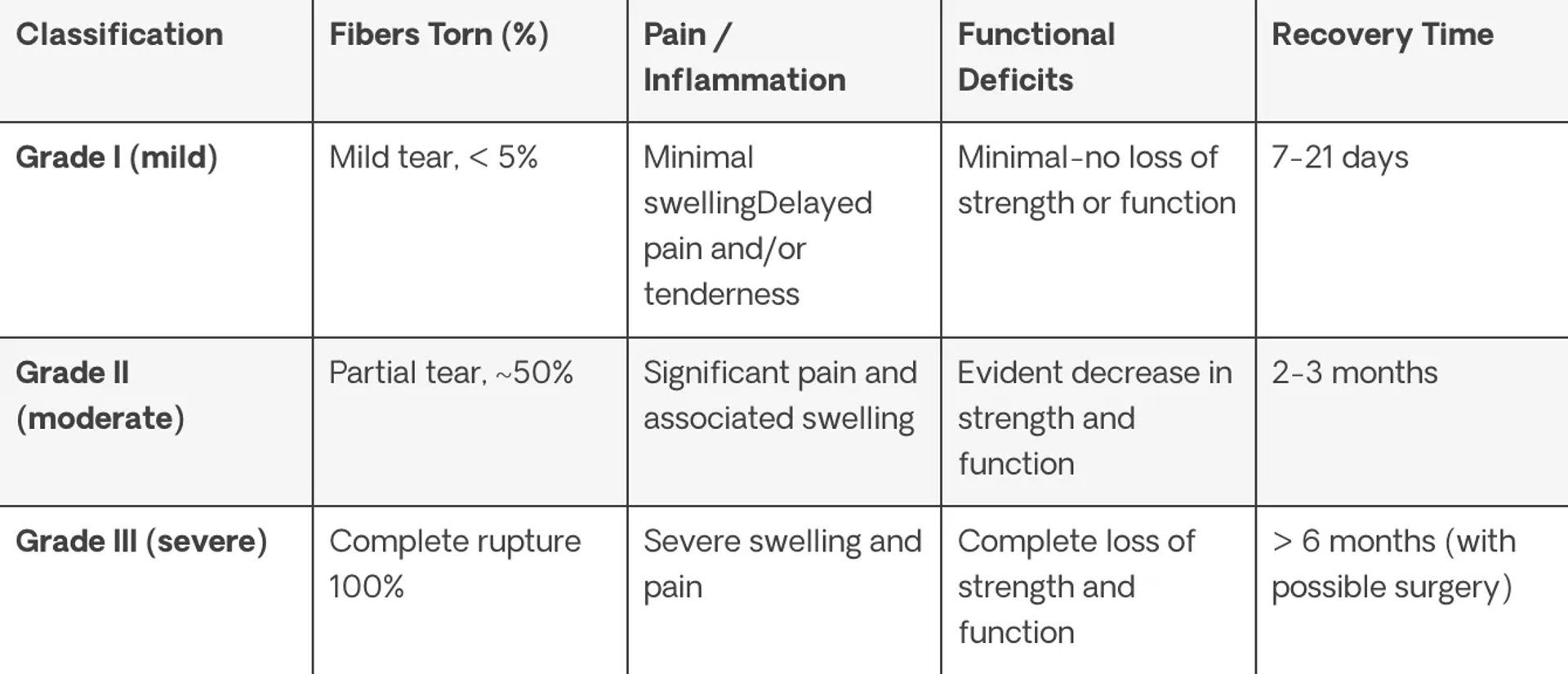
Should I Rest or Stretch?
Neither, mostly. Protect it for the first few days: stop training the injured muscle and avoid anything that reproduces sharp pain. Keep the rest of your body training and keep moving within what's comfortable, because complete rest beyond the first few days weakens the muscle without helping it heal.
Don't stretch it. A strain is an overstretch injury, so stretching the healing muscle repeats the exact mechanism that tore it and can widen the gap the body is trying to close. If the muscle feels tight, that tightness is protective, and it resolves as the tissue rebuilds, which happens through loading rather than lengthening.
Ice and compression have a place in the first day or two if pain or swelling is significant, ten to fifteen minutes at a time. They make the injury more comfortable but don't speed up healing, so treat them as pain relief, and elevate the limb if it's visibly swollen.
The most useful thing you can do early is gentle, pain-free loading. Muscle heals in response to load, and tissue loaded early within pain limits recovers better than tissue left alone. How much load, how soon, is the judgement call a physio makes for you, and it's the difference between a strain that resolves in weeks and one that nags for months.
Rehab after Muscle Strain
Early stage. Pain-free isometrics, holding a contraction without moving the joint, to load the healing tissue without stressing it. Everything unaffected keeps training as normal: a strained hamstring is no reason to stop pressing, squatting through comfortable range, or training the other leg.
Mid stage. Progress from holds to moving under load, rebuilding range of motion as the tissue tolerates it. Start lighter with higher reps, then build toward heavier loads at lower reps as strength returns.
Late stage. Add speed, work through full range, and rebuild the exact movement that caused the injury at full intensity. The muscle has to prove it can handle the original mechanism before you trust it in training or competition.
Reducing Re-injury Risk
Rehab does not end when the injury is pain-free. Rehab should continue until the involved structures are more resilient than pre-injury levels. A strained muscle is most susceptible to re-injury in the first 4 to 6 weeks of return to play or training. Once the exit criteria for rehab are met, rehab should transition into strength and conditioning for ongoing maintenance. It is also important to identify and address modifiable risk factors to successfully rehabilitate and prevent future muscle strains. Common modifiable risk factors include: inadequate warm up, prior injury to the muscle or its associated joints, insufficient range of motion or flexibility.
The Bottom Line
A strain is load exceeding capacity, so recovery means rebuilding capacity, and that comes from progressive loading rather than rest or stretching. Protect the muscle for the first few days, then load it gently and early within pain limits. Don't stretch it, since stretching repeats the injury mechanism, and don't stop rehab when the pain stops: the muscle is most vulnerable to re-injury in the first weeks back, and rehab ends when the tissue is more resilient than it was before the injury, not when it stops hurting.
Strained something and not sure whether to rest or load it? Book in and we'll grade it and build the plan around your sport.
References:
Brukner, P. & Khan, K. (2012). Brukner & Khan’s Clinical Sports Medicine. 4th ed. Sydney: McGraw-Hill Australia. 20-21, 600-603.
Fernandes TL, Pedrinelli A, Hernandez AJ. MUSCLE INJURY – PHYSIOPATHOLOGY, DIAGNOSIS, TREATMENT AND CLINICAL PRESENTATION. Rev Bras Ortop. 2015 Dec 8;46(3):247-55. doi: 10.1016/S2255-4971(15)30190-7. PMID: 27047816; PMCID: PMC4799202.
McHugh, M. P., Cosgrave, N. H. (2010). To stretch or not to stretch: the role of stretching in injury prevention and performance. Scandinavian Journal of Medicine and Science in Sports. 20, 169–181 doi: 10.1111/j.1600-0838.2009.01058.x
Mueller-Wohlfahrt, H. et al. (2012). Terminology and classification of muscle injuries in sport: The Munich consensus statement. Br J Sports Med. p 1-10.