
How Your Hormones Affect Your Bones, Tendons and Ligaments
A lot of women who train regularly notice new joint stiffness, tendon niggles, or aches in their late thirties and forties without connecting them to what is happening hormonally. If you strength train, run, or do any form of loaded exercise and your body has started feeling different, this guide written by our physiotherapist Helen is worth understanding.
Here’s what it covers: what estrogen does to your bones, tendons, and ligaments, what happens during perimenopause and menopause, how the decline shows up tissue by tissue, and why strength training is the most effective response the evidence supports.
What Estrogen Does to Your Bones, Tendons and Ligaments
Estrogen has receptors on bone, tendon, and ligament cells, so it directly influences how these tissues grow, maintain themselves, and respond to training. The effects, however, are not the same across all three.
Bones
Your bones are constantly being broken down and rebuilt. Estrogen keeps the balance tipped in favour of building: it stimulates osteoblasts, the cells that lay down new bone, and slows osteoclasts, the cells that break it apart. While estrogen levels are stable, your bone density stays maintained. When estrogen drops, as it does during menopause, that balance shifts and bone loss accelerates.
Bone density drops fastest in the first five to seven years after menopause, with the spine and hip affected most. Hip fractures become significantly more common in postmenopausal women as a direct consequence of this accelerated loss.
Tendons and Ligaments
Estrogen increases the collagen content in tendons and ligaments, which provides tensile strength to these structures. During perimenopause and menopause, without estrogen’s collagen-stimulating effects, these tissues lose volume, tensile strength and become more prone to degenerative changes. Postmenopausal women see higher rates of rotator cuff tears, tendinopathies, and frozen shoulder.
What Happens During Perimenopause and Menopause
A 2024 clinical review coined the term “musculoskeletal syndrome of menopause” to describe what happens to the body when estrogen drops permanently (Wright et al., 2024). The list includes joint pain, muscle aches, loss of lean muscle mass, dropping bone density, increased tendon and ligament injuries, frozen shoulder, and the progression of osteoarthritis. An estimated 70% of women experience some combination of these symptoms during the menopause transition, and about 25% experience them severely.
These symptoms often begin during perimenopause, before periods have actually stopped. A 2025 review of over 93,000 women confirmed this and found that roughly 40% of affected women have no structural findings on imaging to explain their pain. Scans come back normal, but the pain is real. The underlying driver is the hormonal shift itself, not necessarily damage you can see on an MRI.
Scans come back normal, but the pain is real. The underlying driver is the hormonal shift itself, not necessarily damage you can see on an MRI.
Muscle mass and strength decline with age in everyone, but the rate accelerates during menopause. Losing muscle also means less mechanical loading on your bones and tendons, which compounds the decline in those tissues. Resistance training consistently counteracts this pattern, maintaining muscle mass, strength, and functional capacity through the transition (Tan et al., 2023).
Why Strength Training Is the Best Response
When hormonal support for bone, tendon, and muscle tissue declines, something needs to replace it. The research consistently points to the same answer: mechanical load applied through resistance training with progressive overload.
For Bone Density
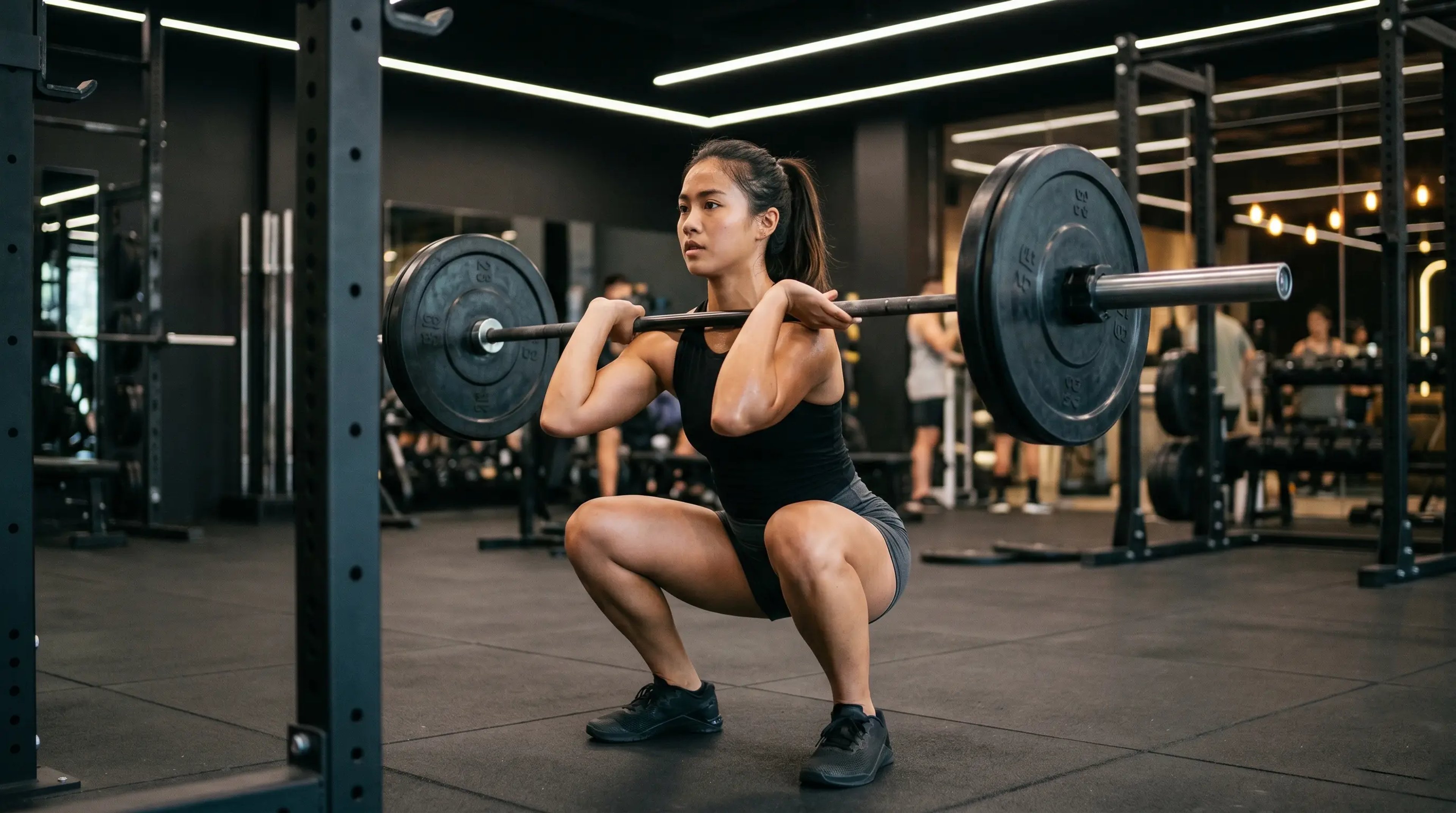
Kemmler et al. (2023) pooled 80 studies and over 5,500 postmenopausal women and found that resistance training produced significant improvements in bone mineral density at the spine, hip, and femoral neck. The LIFTMOR trial showed that training as heavy as five sets of five at 85% of max, twice per week, improved bone density in women with osteopenia and osteoporosis over eight months, with no fractures or serious injuries reported (Watson et al., 2018). Moderate to high intensity protocols outperformed lighter alternatives for bone outcomes (Wang et al., 2023).
Walking, swimming, and yoga do not provide enough mechanical load to drive meaningful bone density changes. They have other benefits, but they do not replace loaded resistance training for bone health.
Walking, swimming, and yoga have other benefits, but they do not replace loaded resistance training for bone health.
For Tendons and Ligaments
Pearson and Hussain (2022) found in a meta-analysis that resistance training is the most effective strategy for making tendons stiffer, thicker, and more resilient across all age groups. For women going through hormonal changes, this is directly relevant: estrogen withdrawal is already reducing tendon stiffness, and resistance training is the primary tool for rebuilding it.
For Muscle Mass
A 2026 review of resistance training across the female lifespan confirmed that strength gains occur regardless of hormonal status. Resistance training produces measurable results at every age studied.
What This Means for You
If you are already strength training with progressive overload, you are doing the most impactful thing the evidence supports for your bone, tendon, and ligament health. Keep going.
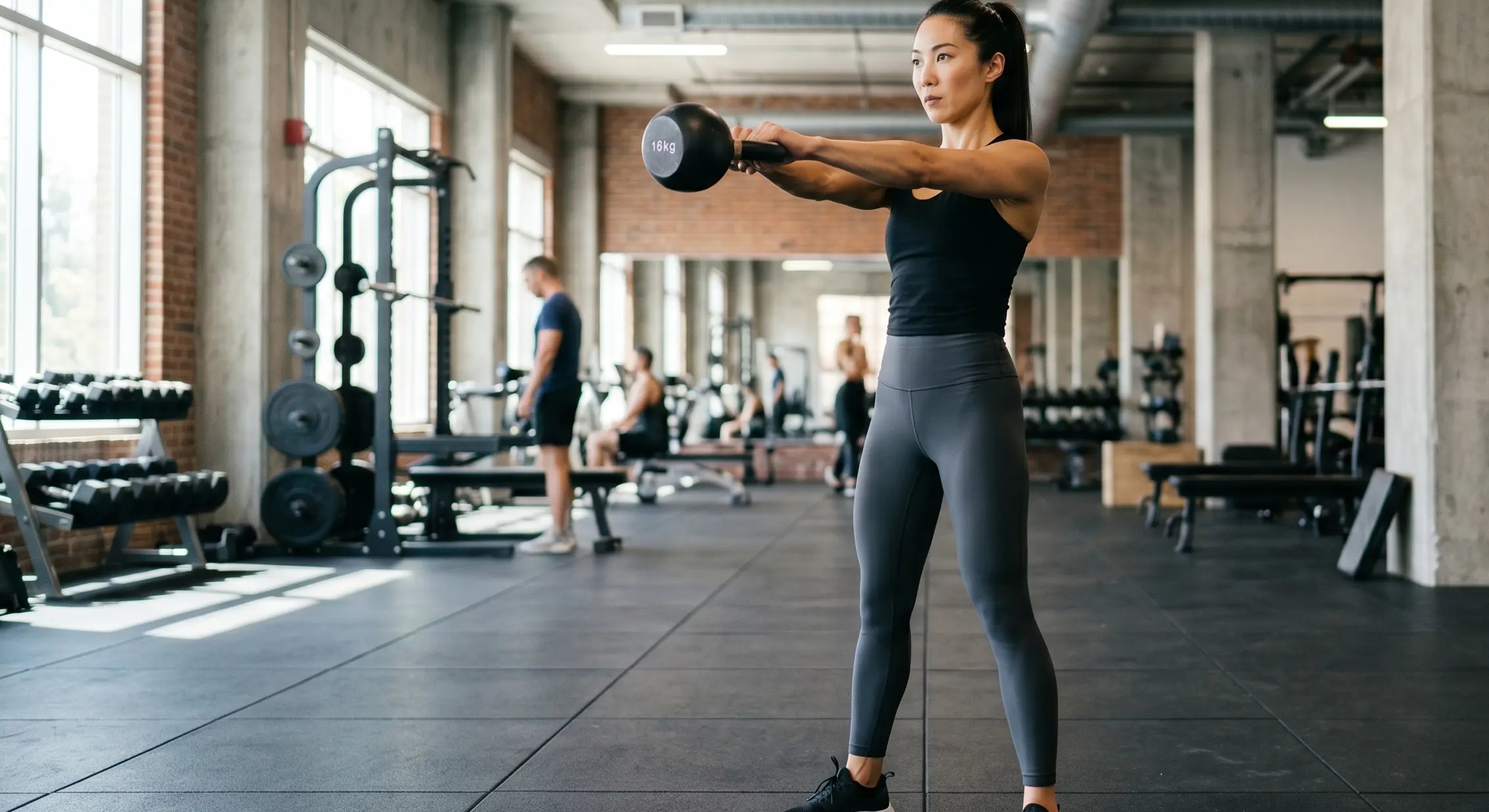
If your training is mostly cardio, Pilates, yoga, or bodyweight work, those activities are valuable for other reasons, but they do not provide the loading your bones and tendons need to adapt. Adding two to three sessions of resistance training per week is the single biggest change you can make for your musculoskeletal health through this transition.
If you are in your late thirties or forties and noticing new joint stiffness, tendon niggles, or aches that were not there before, those symptoms make physiological sense given what is happening hormonally. They do not mean something is broken, and they do not mean you should stop training. In most cases, appropriately dosed resistance training is what addresses the underlying issue.
New aches and stiffness do not mean something is broken, and they do not mean you should stop training.
The Bottom Line
Your bones, tendons, and ligaments are hormone-sensitive tissues. Estrogen and testosterone both play a role in maintaining them, and when those hormones decline, the tissues lose capacity. Strength training is the most effective way to maintain and rebuild that capacity, at any age.
Strength training is the most effective way to maintain and rebuild that capacity, at any age.
A follow-up article will cover what to lift, how heavy, how often, and how to progress through different life stages. If you want help building a programme that accounts for where your body is right now, you can book a session Helen here:

Written by Helen Nguyen | Physiotherapist, Activex Physio Singapore
References
- Gilmer, G., Crasta, N. and Tanaka, M.J. (2025). The Effect of Sex Hormones on Joint Ligament Properties: A Systematic Review and Meta-analysis. American Journal of Sports Medicine, 53(11), 2738–2748.
- Kemmler, W., Shojaa, M., Kohl, M. and von Stengel, S. (2023). Exercise training and bone mineral density in postmenopausal women: an updated systematic review and meta-analysis. Osteoporosis International, 34, 1145–1163.
- Li, Y. et al. (2025). Optimal resistance training parameters for improving bone mineral density in postmenopausal women: a systematic review and meta-analysis. Journal of Orthopaedic Surgery and Research.
- Pearson, S.J. and Hussain, S.R. (2022). Mechanical, Material and Morphological Adaptations of Healthy Lower Limb Tendons to Mechanical Loading: A Systematic Review and Meta-Analysis. Sports Medicine, 52, 2405–2428.
- Sander, E.A. et al. (2026). Estrogen and Progesterone Exhibit Distinct Yet Coordinated Roles in the Regulation of Tendon Extracellular Matrix Remodeling. Journal of Orthopaedic Research.
- Tan, T.W. et al. (2023). Effect of non-pharmacological interventions on the prevention of sarcopenia in menopausal women: a systematic review and meta-analysis. BMC Women’s Health, 23(1), 606.
- Wang, Z. et al. (2023). Comparative efficacy of different resistance training protocols on bone mineral density in postmenopausal women: A systematic review and network meta-analysis. Frontiers in Physiology, 14, 1105303.
- Watson, S.L. et al. (2018). High-Intensity Resistance and Impact Training Improves Bone Mineral Density and Physical Function in Postmenopausal Women With Osteopenia and Osteoporosis: The LIFTMOR Randomized Controlled Trial. Journal of Bone and Mineral Research, 33(2), 211–220.
- Wright, V.J., Schwartzman, J.D., Itinoche, R. and Wittstein, J. (2024). The musculoskeletal syndrome of menopause. Climacteric, 27(5), 466–472.
- Kruse C, et al. (2026). Musculoskeletal Manifestations of Perimenopause: A Systematic Review and Meta-Analysis of 93,021 Women. JBJS Open Access, 11(1), e25.00254.
- Isenmann E, et al. (2026). It’s never too late: The impact of resistance training on strength and body composition in females across the lifespan – A systematic review and meta-analysis. Journal of Science and Medicine in Sport, 11.