
What to Lift When Your Hormones Are Changing
Bone, tendon and muscle tissue adapt to the load placed on them. During perimenopause and menopause, the hormonal support that helped maintain these tissues decline, and the loading signal from resistance training becomes the primary tool for preserving what hormones used to protect.
Part 1 of this series covered why these changes happen. If you’re looking for what to actually do about them, what to lift, how heavy, how often, and how to progress, you’ll want to read this guide by Helen. Here’s what it covers: why intensity matters, exercise selection for bone and tendon health, training frequency, how to start and progress, and realistic timelines for results.
Why Intensity Matters
Walking, swimming and gentle exercise classes are commonly recommended for women going through menopause, and they deliver real benefits for cardiovascular health, mood and general wellbeing. But they do not provide enough mechanical load to maintain bone density or drive tendon adaptation.
Kemmler et al. (2023) pooled 80 studies and over 5,500 postmenopausal women and found that resistance training produced significant improvements in bone mineral density at the spine, hip and femoral neck, while lower-intensity exercise had smaller and less consistent effects. Wang et al. (2023) reached a similar conclusion confirming that moderate to high intensity resistance training outperformed lighter alternatives for bone density at both the lumbar spine and femoral neck. For most women, this means the training needs to involve weights heavy enough that the last few reps of each set feel genuinely challenging.
Your tendons follow the same principle. Pearson and Hussain (2022) confirmed that resistance training is the most effective strategy for increasing tendon stiffness, cross-sectional area and material strength across all age groups, and that lighter forms of exercise do not load the tissue enough to drive these adaptations.
The training needs to be hard enough to challenge your tissues, and it needs to get progressively harder over time. That principle, progressive overload, is the foundation of everything that follows.
How Heavy to Train
The strongest evidence for bone density improvements comes from training at moderate to high intensity, roughly 60 to 85% of your one-rep max, which for most women translates to sets where the last two to three reps feel genuinely hard.
The LIFTMOR trial is the most commonly referenced study in this area (Watson et al., 2018). Postmenopausal women with osteopenia and osteoporosis trained twice a week for eight months using five sets of five repetitions at greater than 85% of their one-rep max, with a programme that included deadlifts, overhead press and back squats, plus impact loading through jumping chin-ups with drop landings. Bone density at the lumbar spine and femoral neck improved significantly, and there were no fractures or serious adverse events.
Postmenopausal women with low bone density trained at 85% of max, twice per week, for eight months, and their bone density improved with no fractures or serious injuries.
Li et al. (2025) confirmed these findings: training at moderate to high intensity, two to three times per week, produced the most consistent bone density improvements across the spine and hip. Lower intensities showed some benefit, but the effect sizes were smaller and less reliable.
If the idea of training at 85% of your max feels intimidating, that is understandable, and most women will start well below that and build over months. The research on tendon adaptation also shows that even moderate-intensity loading produces meaningful improvements in tendon stiffness and cross-sectional area (Pearson and Hussain, 2022), so you do not need to be at the top end of intensity to see results. You do need to be working hard enough that your body registers the demand.
What Exercises to Focus On
The exercises that best protect bone density load the sites most vulnerable to fracture: the lumbar spine and the hip. Compound barbell and dumbbell movements do this well because they work multiple joints and large muscle groups at once, and they allow you to increase weight in small, trackable increments.
Based on the protocols used in the highest-quality trials and the clinical reasoning behind them, these are the categories to build your programme around:
Hip hinge movements. Deadlifts (conventional, sumo, or trap bar) and Romanian deadlifts load the posterior chain, the lumbar spine and the hip directly. The deadlift was included in the LIFTMOR trial for good reason: it is one of the most effective ways to load the skeleton through the spine and hip in a single movement.
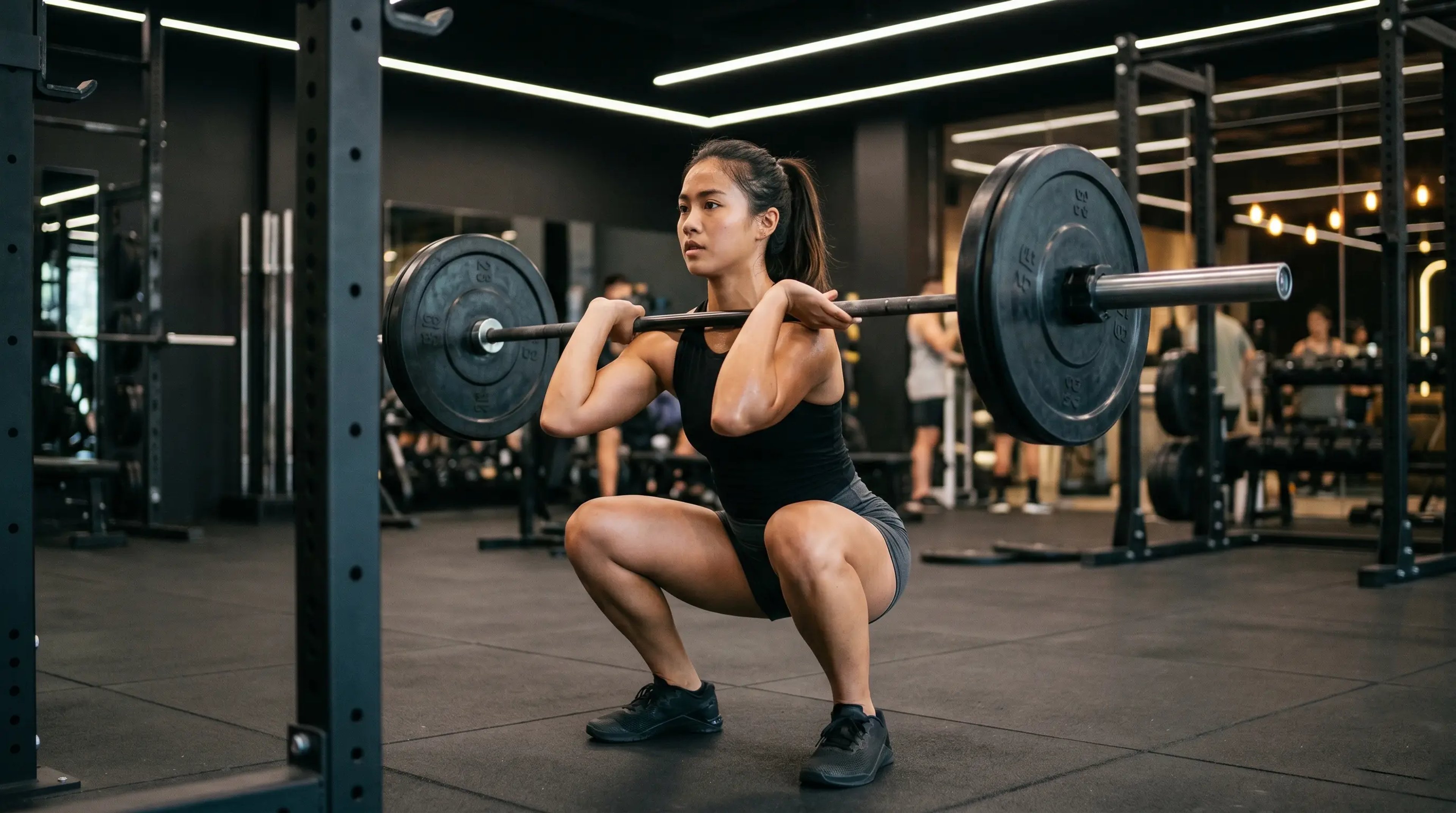
Squat variations. Back squats, goblet squats, or leg press load the femoral neck and lumbar spine while building the quadriceps and glute strength that supports your knees and hips. If mobility is a limiting factor, a goblet squat or box squat is a reasonable starting point before progressing to a barbell.
Upper body pressing and pulling. Overhead press, bench press, rows and lat pulldowns. Overhead pressing loads the spine axially, while pulling movements load the lumbar spine and maintain grip strength, which declines with age and is independently linked to fracture risk.
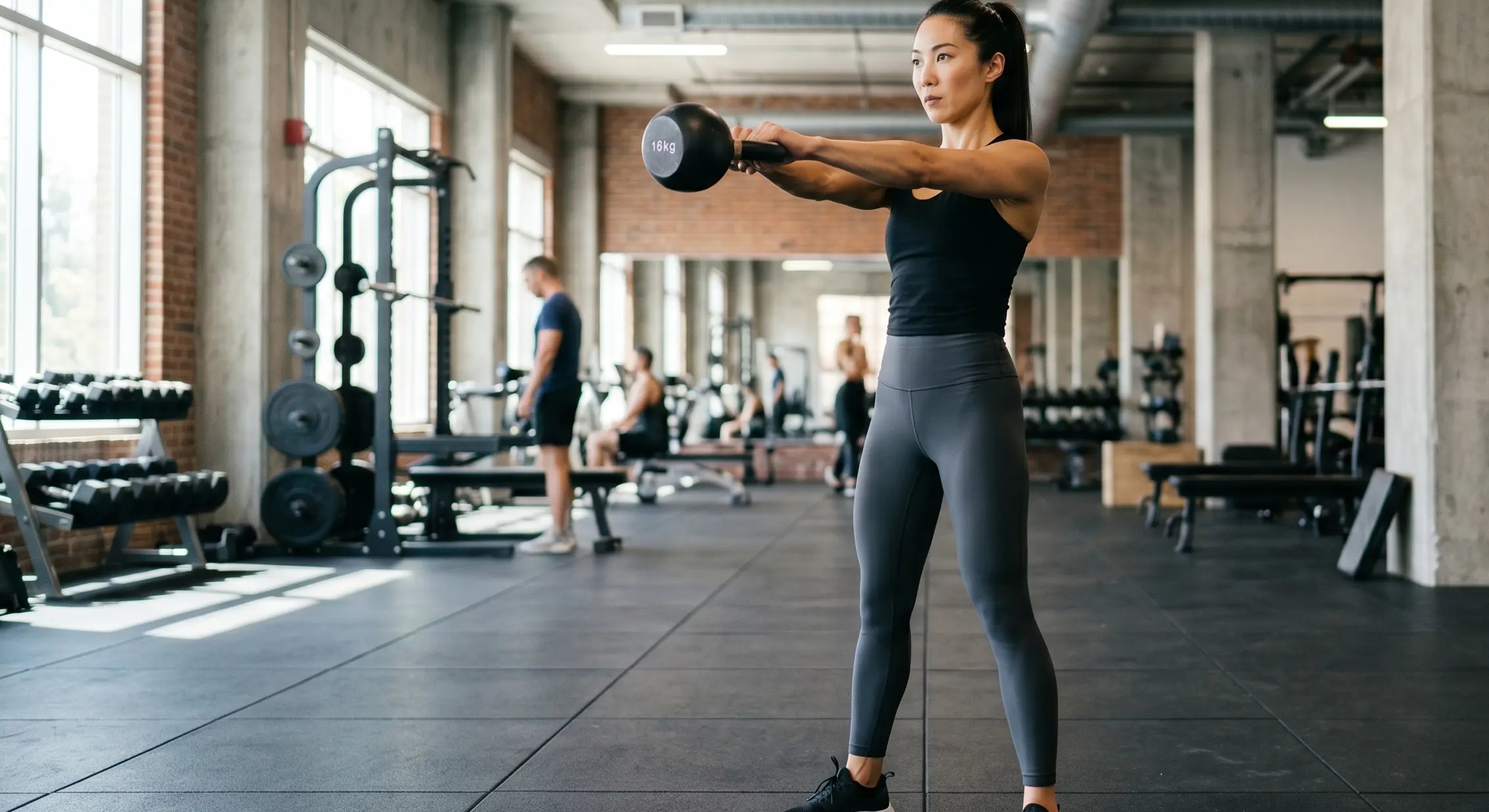
Loaded carries and impact. Farmer’s walks and step-ups provide additional spinal loading while challenging balance and coordination. If you can tolerate impact, activities like jumping or running provide the high-rate loading that bone tissue responds well to.
How Often to Train
The research converges on two to three sessions per week as the effective dose for bone and tendon adaptation, with Kemmler et al. (2023) identifying training frequency as a significant moderator of bone density outcomes. Two sessions per week was the minimum effective dose in most included studies, and three sessions per week was common in the protocols showing the largest effects.
De Souza et al. (2023) reviewed resistance training volume in postmenopausal women and found both higher and lower volume programmes improved outcomes when intensity was moderate to high, and frequency was at least twice weekly. If you are starting from zero resistance training, two sessions per week covering the major movement patterns listed above is a realistic and evidence-supported starting point.
Interventions shorter than six months showed weaker effects on bone density, because consistency over time matters more than cramming extra sessions into a week.
As capacity and confidence build, a third session can be added, but the real goal is a frequency you can sustain for months and years, because bone adaptation is slow and the benefits compound with time.
How to Start If You Haven’t Done This Before
A 2026 meta-analysis of 126 studies across the female lifespan found that resistance training produces equivalent strength gains in pre- and postmenopausal women, with no significant difference between groups. Neither age nor hormonal status predicted the magnitude of adaptation, which means the training stimulus matters more than the hormonal environment it is delivered in.
Neither age nor hormonal status predicted how much strength women gained from resistance training, which means it is never too late to start.
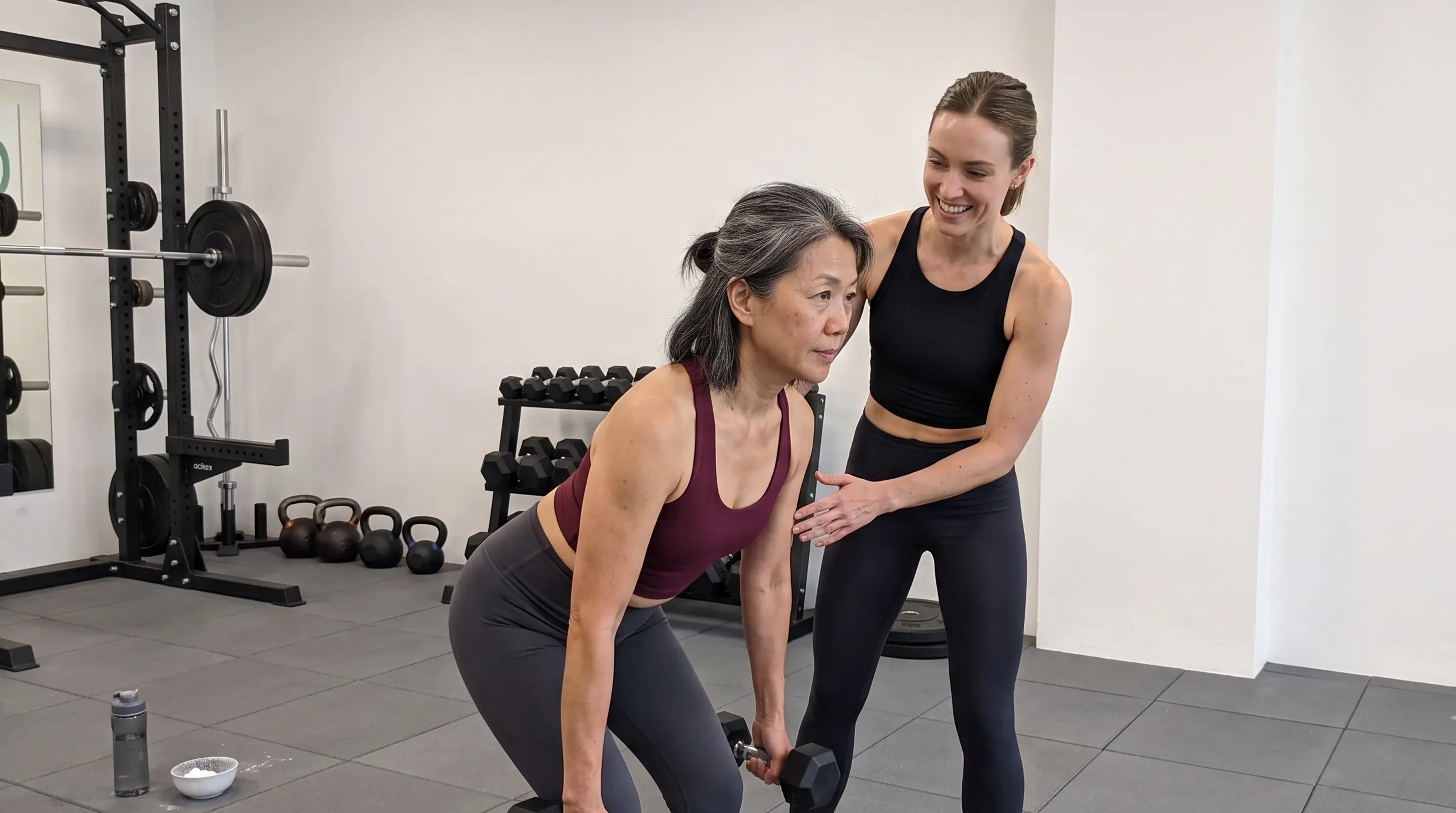
If you are new to resistance training, the first priority is learning the movement patterns with good form, which typically means starting with lighter loads or bodyweight and building from there over four to eight weeks. A physiotherapist or experienced strength coach can help with this process, especially if you have existing joint pain, a history of injury, or concerns about bone density.
If you’re starting from scratch, a reasonable progression might look like this:
Weeks 1 to 4. Learn the movements. Two sessions per week, two to three sets of 10 to 12 reps at a weight where you finish each set with two to three reps still in reserve, focusing on squat, hinge, press and pull patterns.
Weeks 5 to 12. Increase load gradually, moving toward sets of 8 to 10 reps where the last two reps feel hard, and adding a small amount of weight each week where form allows. This is where most women notice they are getting stronger and the movements start to feel more natural.
Months 3 to 6. Continue progressing load. You can introduce lower rep ranges (five to eight reps) on some exercises, particularly deadlifts and squats, to move closer to the intensity ranges shown to be most effective for bone density, and a third session can be added if recovery and schedule allows.
Month 6 onward. Maintain two to three sessions per week with ongoing progressive overload. Bone density changes take at least six months to measure on a DEXA scan, and tendon adaptations continue to develop over longer timeframes, so the goal at this stage is a sustainable, long-term training habit.
What If You Already Have Joint Pain or Stiffness
If you are in your forties or fifties and experiencing new joint pain, stiffness or tendon sensitivity, starting strength training can feel counterintuitive. But these symptoms are often driven by the loss of hormonal support for your tissues rather than by structural damage, and when a 2025 review examined over 93,000 women, it found that 40% of those with musculoskeletal symptoms during perimenopause had no structural findings on imaging to explain their pain.
Appropriately dosed resistance training addresses the underlying capacity problem, and while training does not need to be pain-free from day one, pain should be manageable and should not be worsening over time. A physio can help you find the right entry point, modify exercises around specific limitations, and progress at a pace that matches where you are right now.
Avoiding load because of joint discomfort tends to make the problem worse over time, because the tissues continue to lose capacity without the mechanical stimulus they need to adapt.
How Long Before You See Results
Strength improvements tend to show up often within four to six weeks of consistent training.
Muscle size changes typically become noticeable around eight to twelve weeks with consistent training, and tendon adaptations, including increased stiffness and cross-sectional area, follow a similar timeline but continue to develop over months.
Bone density changes take the longest to appear. Most studies measuring bone mineral density via DEXA scan report significant changes at six to twelve months of consistent training, and the LIFTMOR trial measured its results at eight months. Kemmler et al. (2023) noted that interventions shorter than six months showed weaker effects, which underscores the broader point: bone adaptation is slow, and maintaining the programme over time matters more than any individual session.
The Bottom Line
Your bones, tendons and muscles adapt to load, and during perimenopause and menopause, the hormonal support for these tissues drops, which makes loading them through resistance training more important than it has ever been. The evidence supports training two to three times per week, at moderate to high intensity, using compound movements that target the spine and hip. Start where you are, progress gradually, and give it at least six months before expecting measurable bone density changes.
If you want help finding the right starting point or building a programme that accounts for where your body is right now, you can book in with Helen to get started.
Written by Helen Nguyen | Physiotherapist, Activex Physio Singapore
This is Part 2 of a series on hormones and women’s musculoskeletal health. Part 1 covers how estrogen affects your bones, tendons and ligaments. Part 3 will cover diastasis recti and return to exercise.
References
De Souza, M.F. et al. (2023). Effect of resistance training volume on body adiposity, metabolic risk, and inflammation in postmenopausal and older females: Systematic review and meta-analysis of randomized controlled trials. Journal of Sport and Health Science, 12(5), 545–558.
Kemmler, W., Shojaa, M., Kohl, M. and von Stengel, S. (2023). Exercise training and bone mineral density in postmenopausal women: an updated systematic review and meta-analysis of intervention studies. Osteoporosis International, 34, 1145–1163.
Li, Y. et al. (2025). Optimal resistance training parameters for improving bone mineral density in postmenopausal women: a systematic review and meta-analysis. Journal of Orthopaedic Surgery and Research.
Pearson, S.J. and Hussain, S.R. (2022). Mechanical, Material and Morphological Adaptations of Healthy Lower Limb Tendons to Mechanical Loading: A Systematic Review and Meta-Analysis. Sports Medicine, 52, 2405–2428.
Wang, Z. et al. (2023). Comparative efficacy of different resistance training protocols on bone mineral density in postmenopausal women: A systematic review and network meta-analysis. Frontiers in Physiology, 14, 1105303.
Watson, S.L. et al. (2018). High-Intensity Resistance and Impact Training Improves Bone Mineral Density and Physical Function in Postmenopausal Women With Osteopenia and Osteoporosis: The LIFTMOR Randomized Controlled Trial. Journal of Bone and Mineral Research, 33(2), 211–220.
Kruse, C., McKechnie, T., Dworsky-Fried, J., Sardar, A., Hacker, G., Rattansi, S., Fang, E., Sprague, S., Shea, A.K. and Bhandari, M. (2026). Musculoskeletal manifestations of perimenopause: A systematic review and meta-analysis of 93,021 women. JBJS Open Access, 11(1), e25.00254.
Isenmann, E., Geisler, S., Havers, T., Siegert, F., Hemke, F. and Held, S. (2026). It’s never too late: The impact of resistance training on strength and body composition in females across the lifespan – A systematic review and meta-analysis. Journal of Science and Medicine in Sport, 29(3), 284–292.