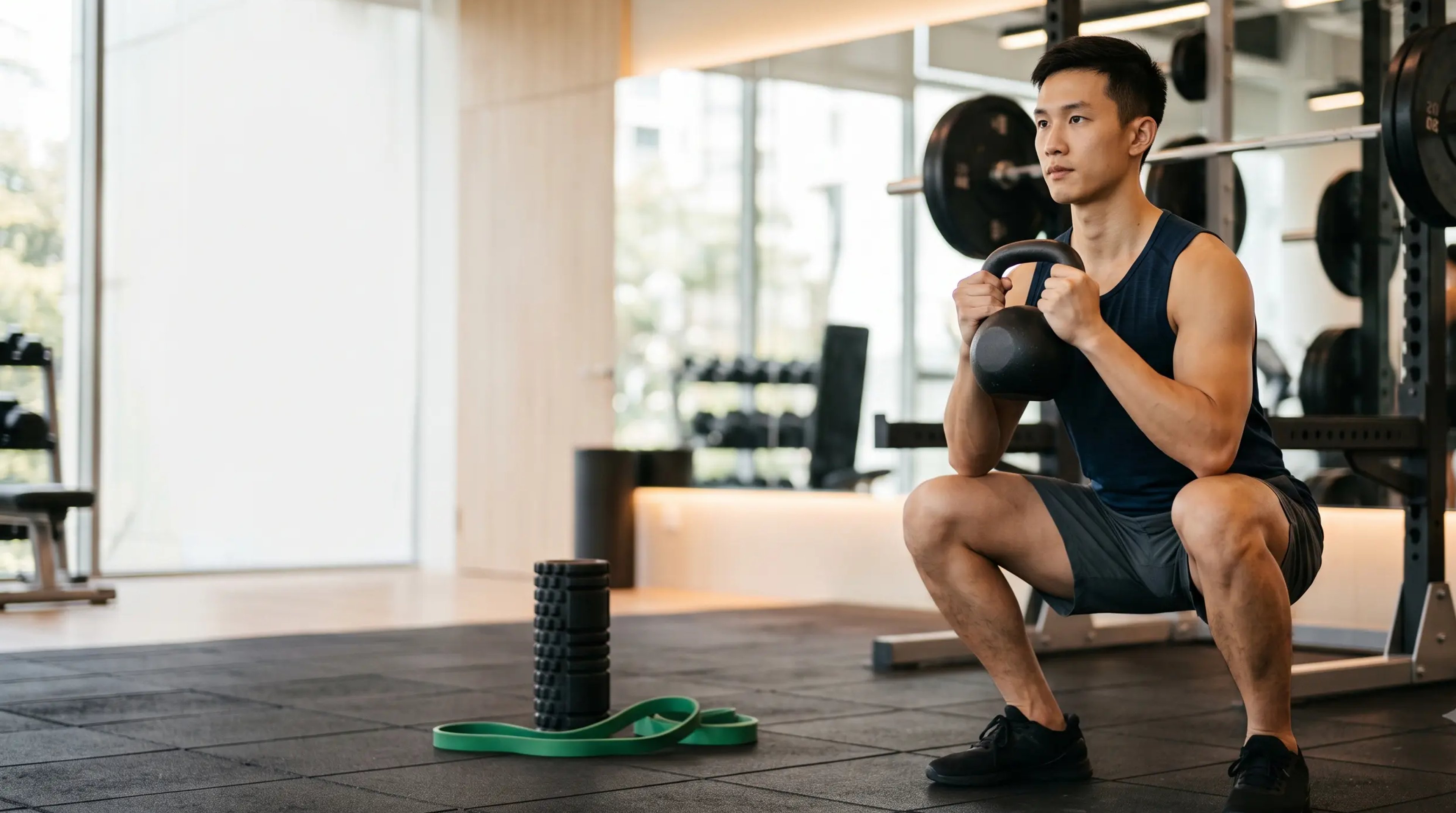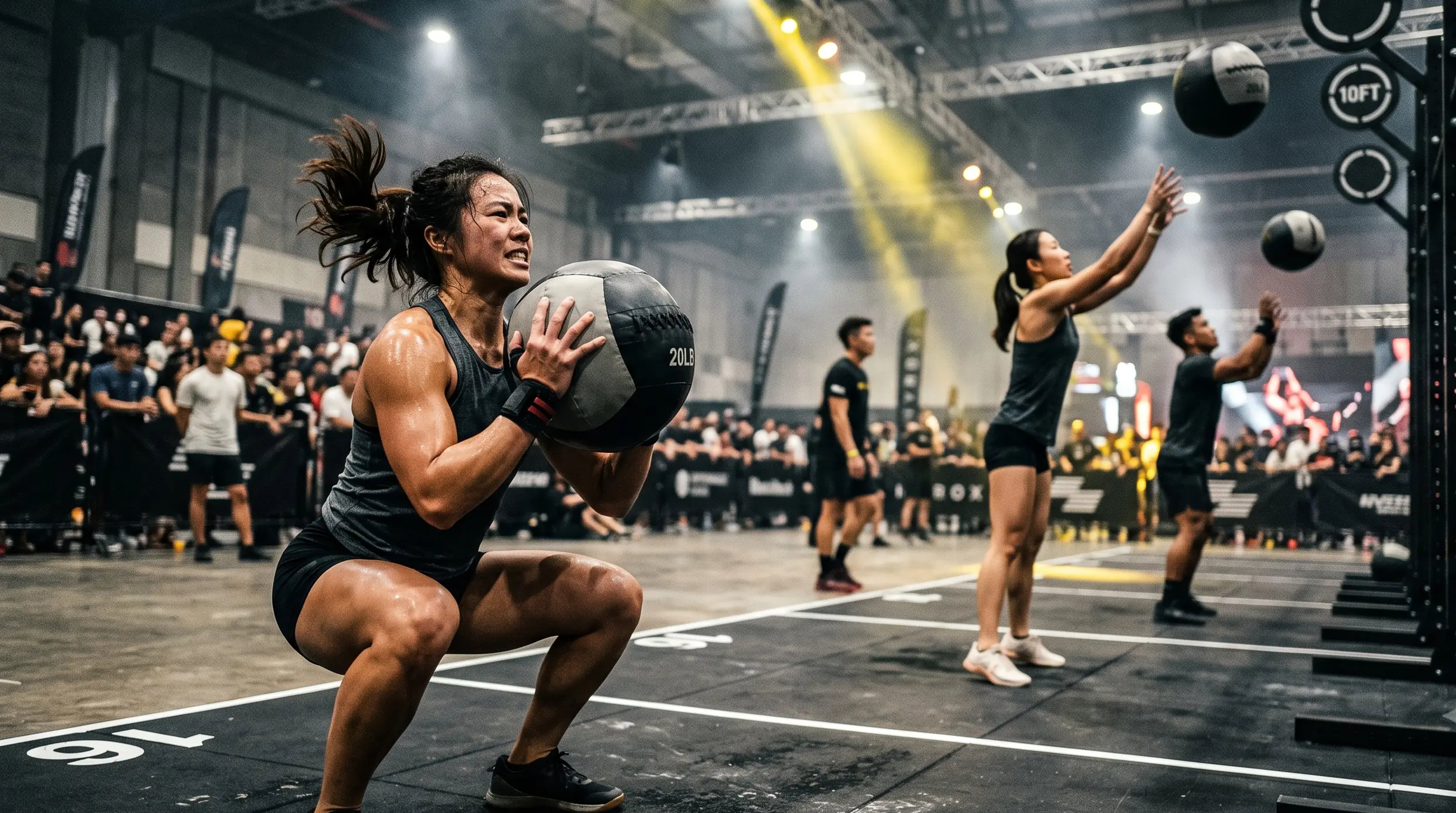

Struggling to train for wall balls this Hyrox season?
POV: when you thought wall balls were just cardio… until your quads started burning, and your knees started screaming!
Let’s break it down and help you become pain-free and more efficient with each rep!
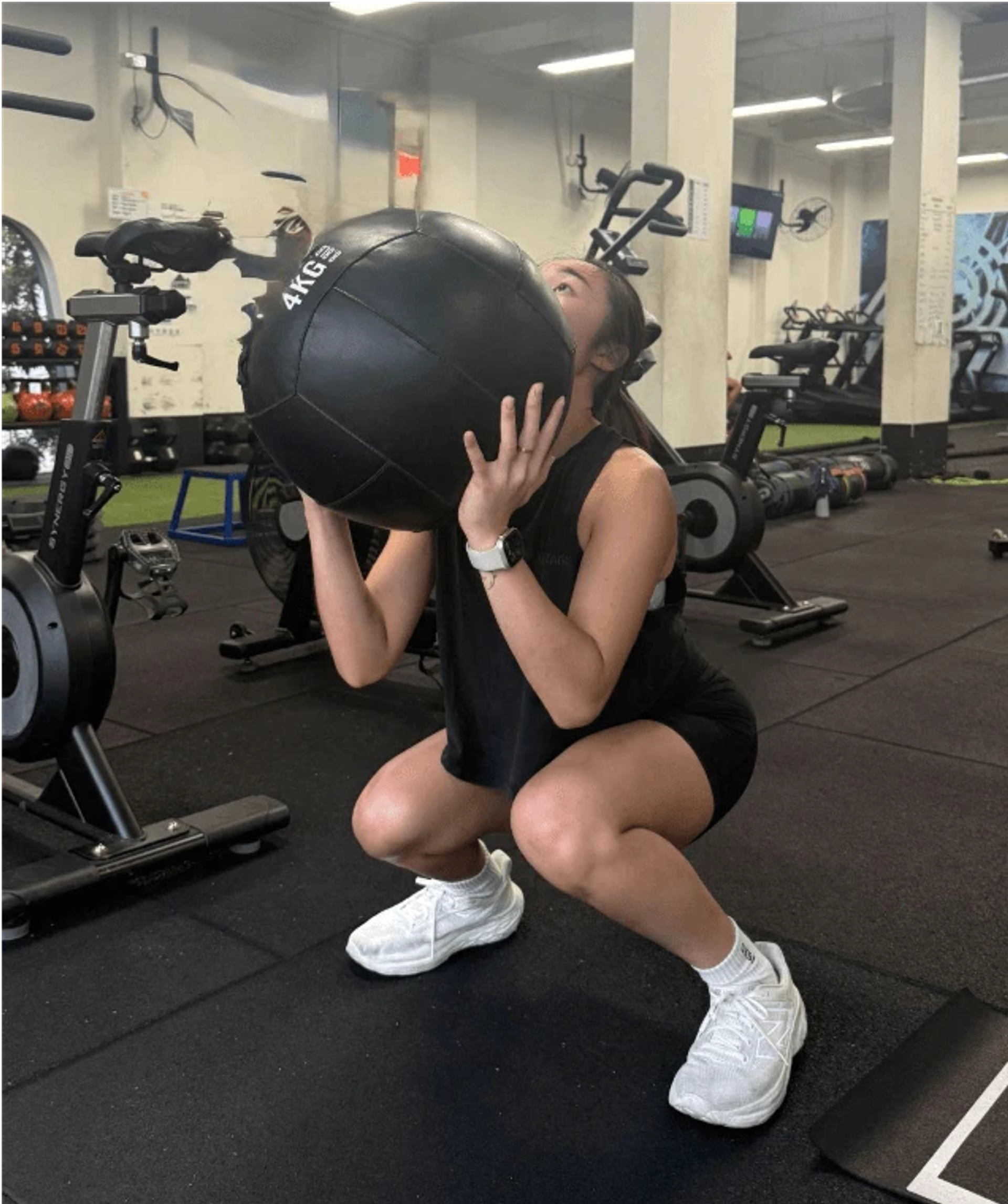
What is a wall ball?
Think of a wall ball as an explosive push press. It is a movement pattern requiring an upright chest to receive the ball into a deep front loaded squat, followed by triple extension to drive the ball overhead – a simultaneous extension of the hips, knees, and ankles.
1. Why do your legs fatigue so fast?
While wall balls are a compound movement, with its front-loaded mechanics, the movement recruits more quadriceps, with this demand increasing further under fatigue. The movement alternates between two phases: triple extension during the throw, and force absorption as you descend into the catch.
As the reps climb up and fatigue sets in, gluteal contribution becomes less efficient which reduces hip drive, and shifts load anteriorly to the quadriceps and knee structures.
2. What’s the link between quad fatigue and knee pain?
When wall balls are programmed at the end of a Hyrox race, fatigue is at its peak. Sustaining a high-volume, quad-dominant movement under cumulative load, especially with limited mobility or inadequate recovery, can amplify compensatory patterns and loading imbalances, such as:
- Knee valgus
- Reduced hip extension
- Increased lumbar extension to maintain upright chest
These can increase the risk of overuse injuries such as patellofemoral pain syndrome, patellar tendinopathy, or quadriceps tendinopathy.
3. Troubleshoot – what’s holding you back?
What you’ll observe ⇨ What could be limiting ⇨ What to work on
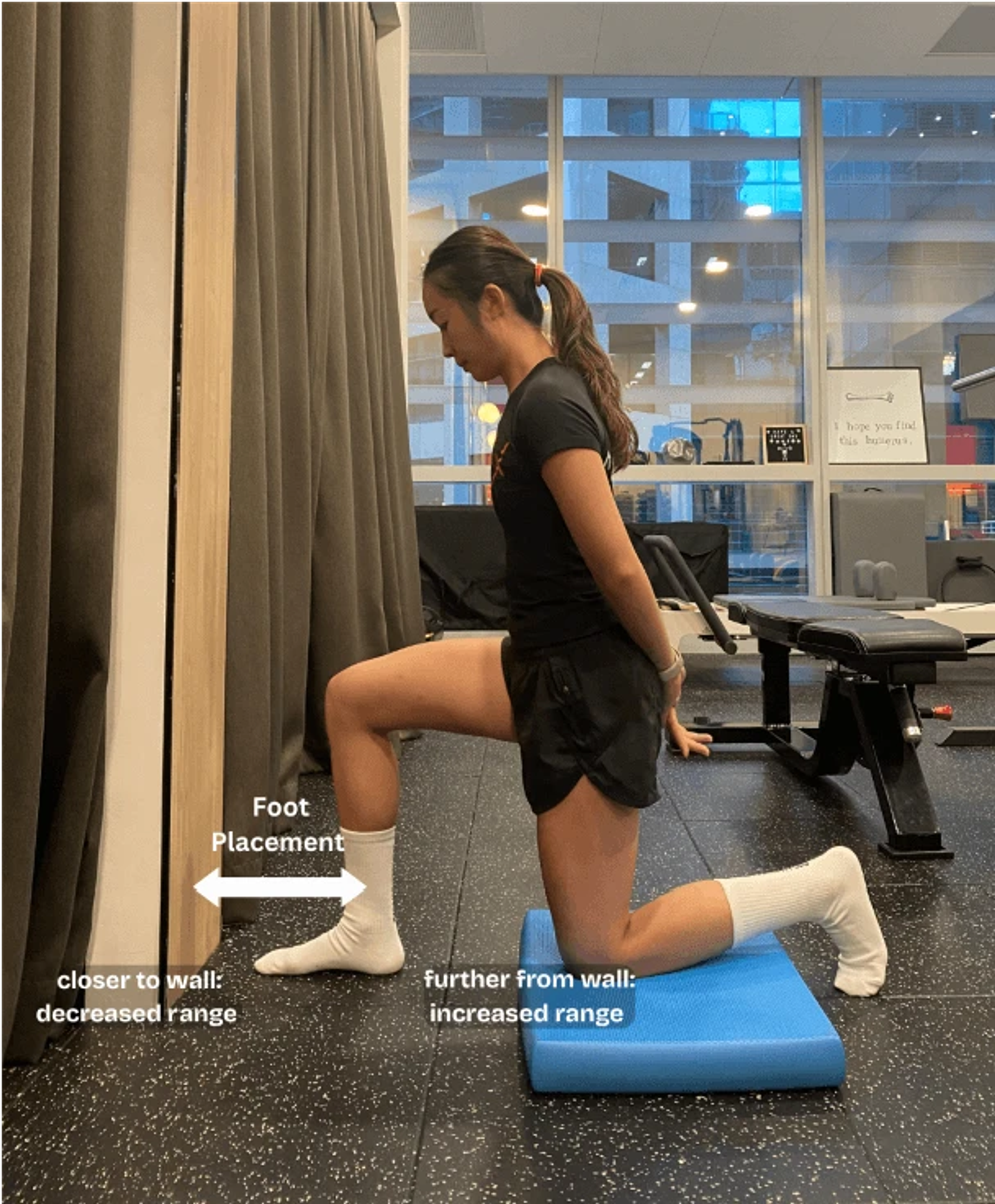
Observation: Heels lifting off as knees drifting too far forwards
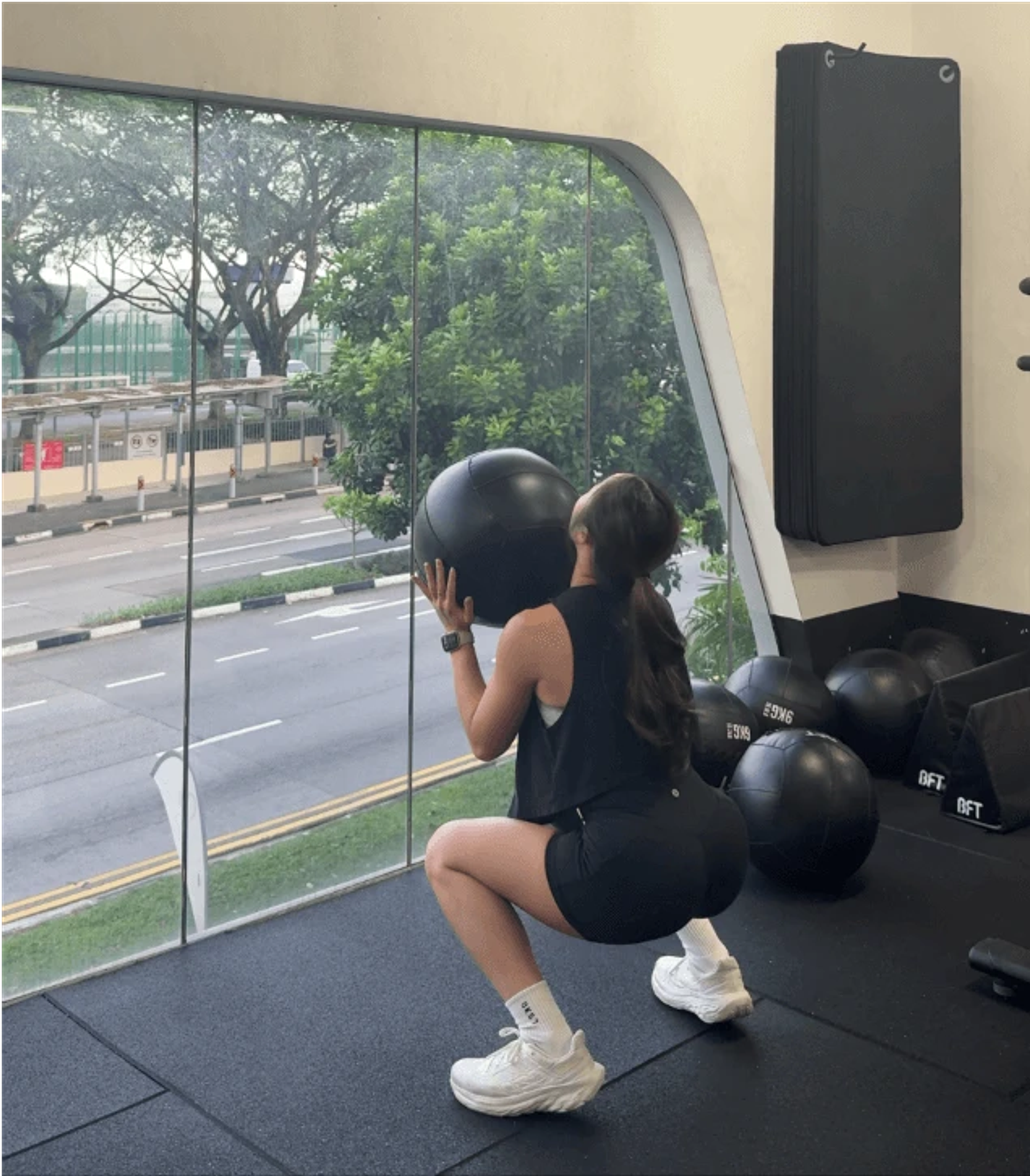
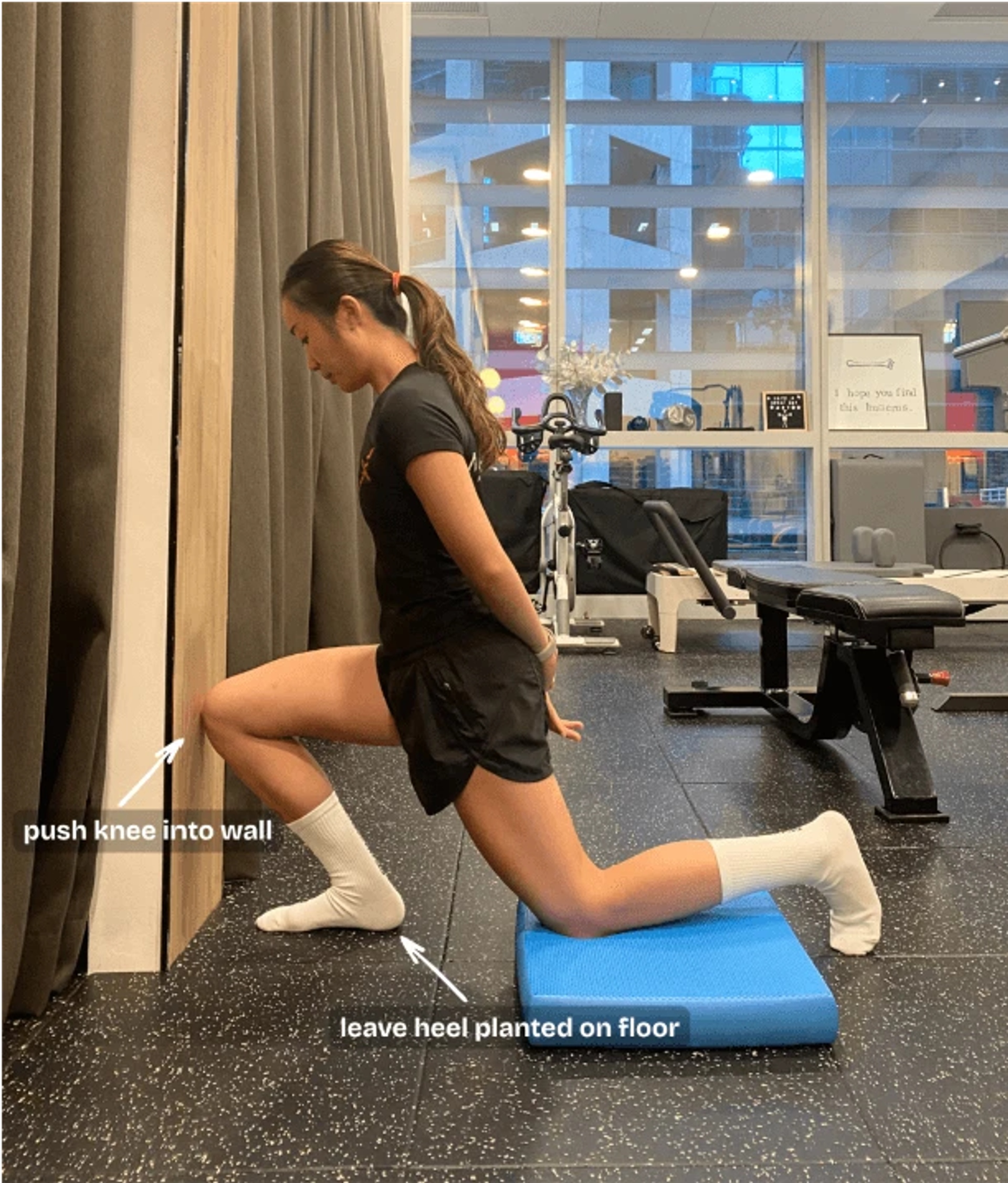
What could be limiting: Ankle dorsiflexion
What to work on: Self mobilization of ankle
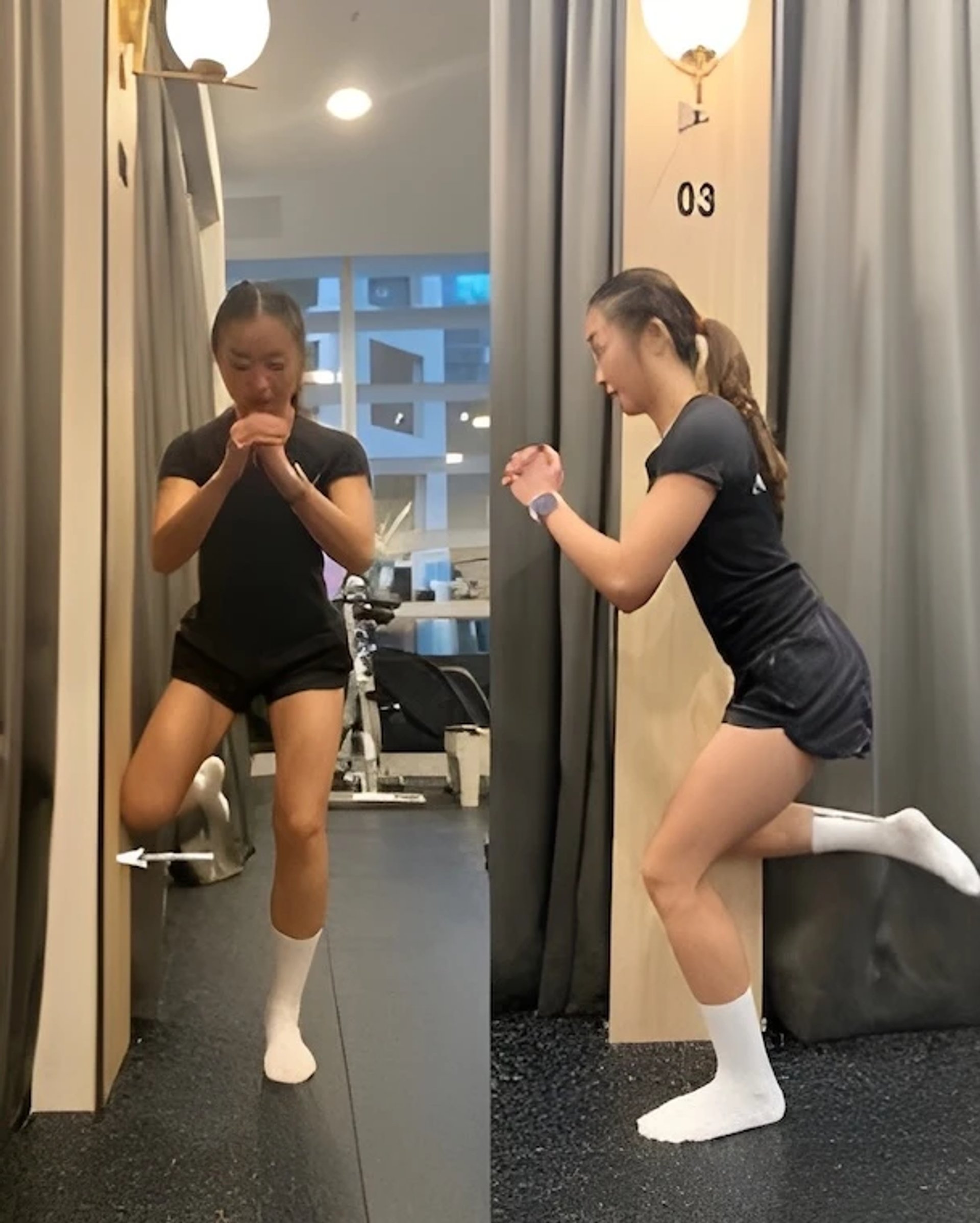
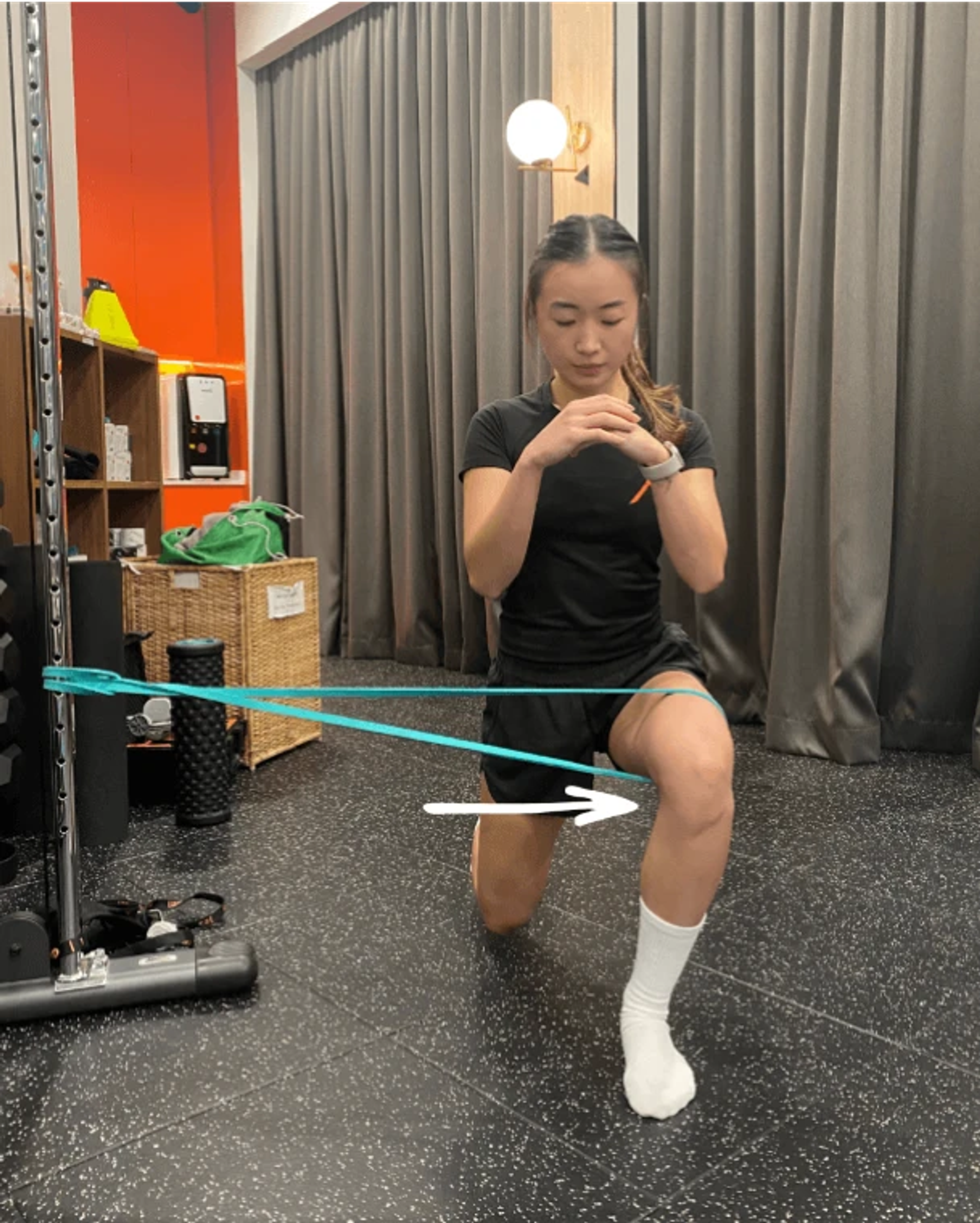
Observation: Uncontrolled squat depth with knees caving in
What could be limiting:
- Inhibited glutes or fatigue under load
- Reduced ankle dorsiflexion
What to work on: Targeted glutes & quads exercises
Observation: Excessive arch in lower back on catch/throw
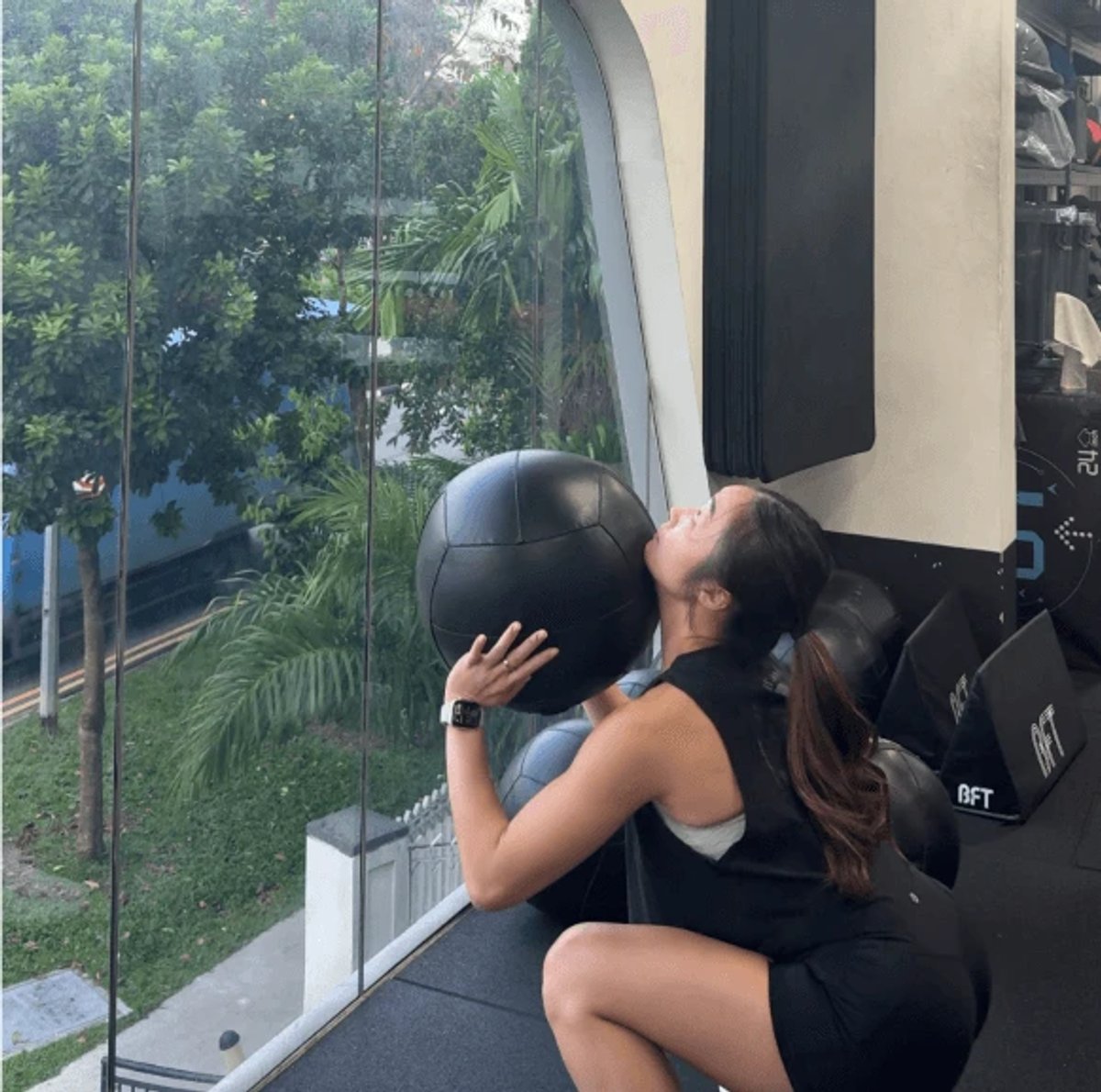
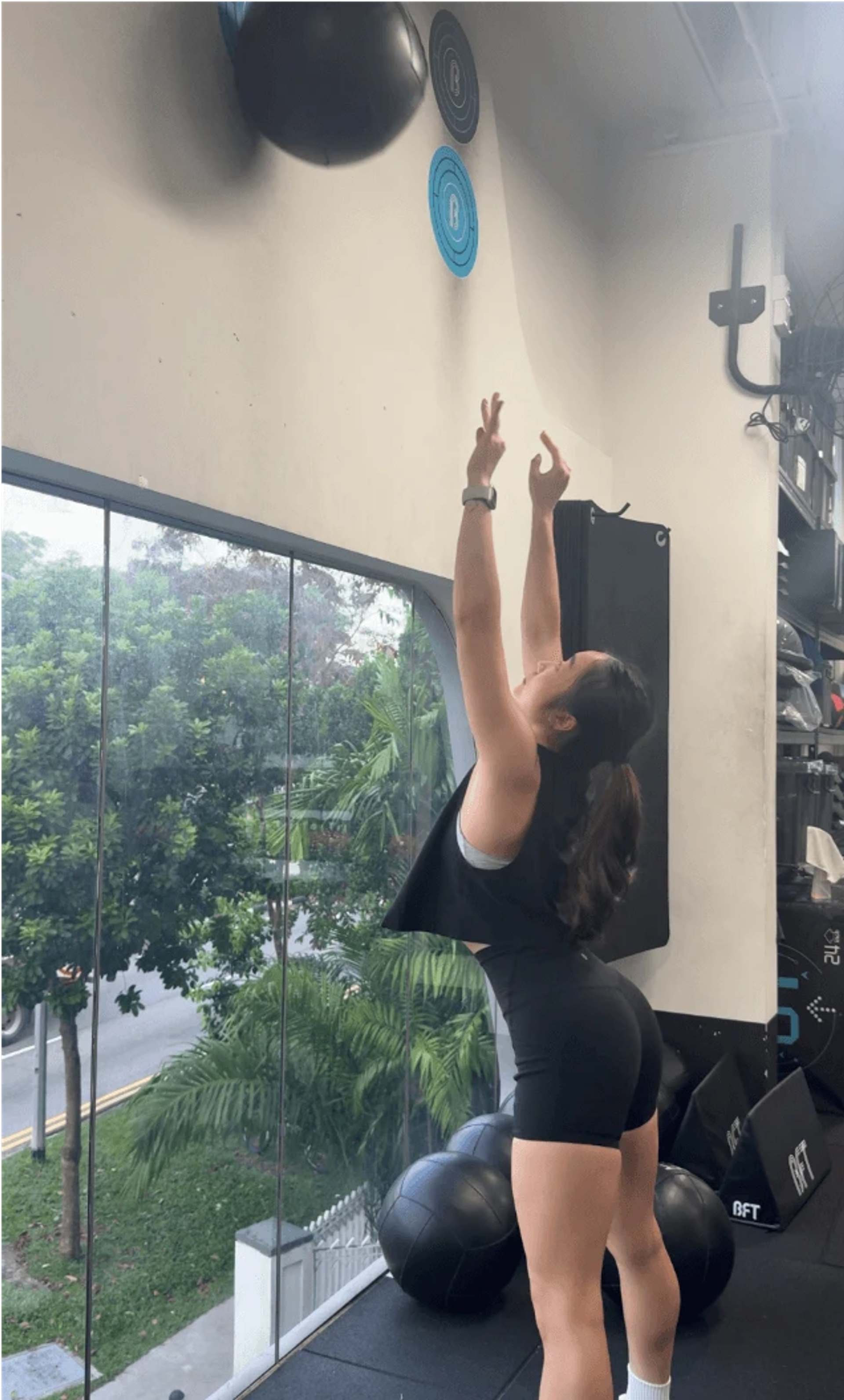
What could be limiting:
- Decreased control of hip and core
- Tight hip flexors
- Decreased thoracic mobility
What to work on:
- Front loaded variations (Goblet squats, zercher squats)
- Front squats
- Hip flexor stretches
- Thoracic mobility drills
- Foam roll thoracic into extension
- Book opening stretch
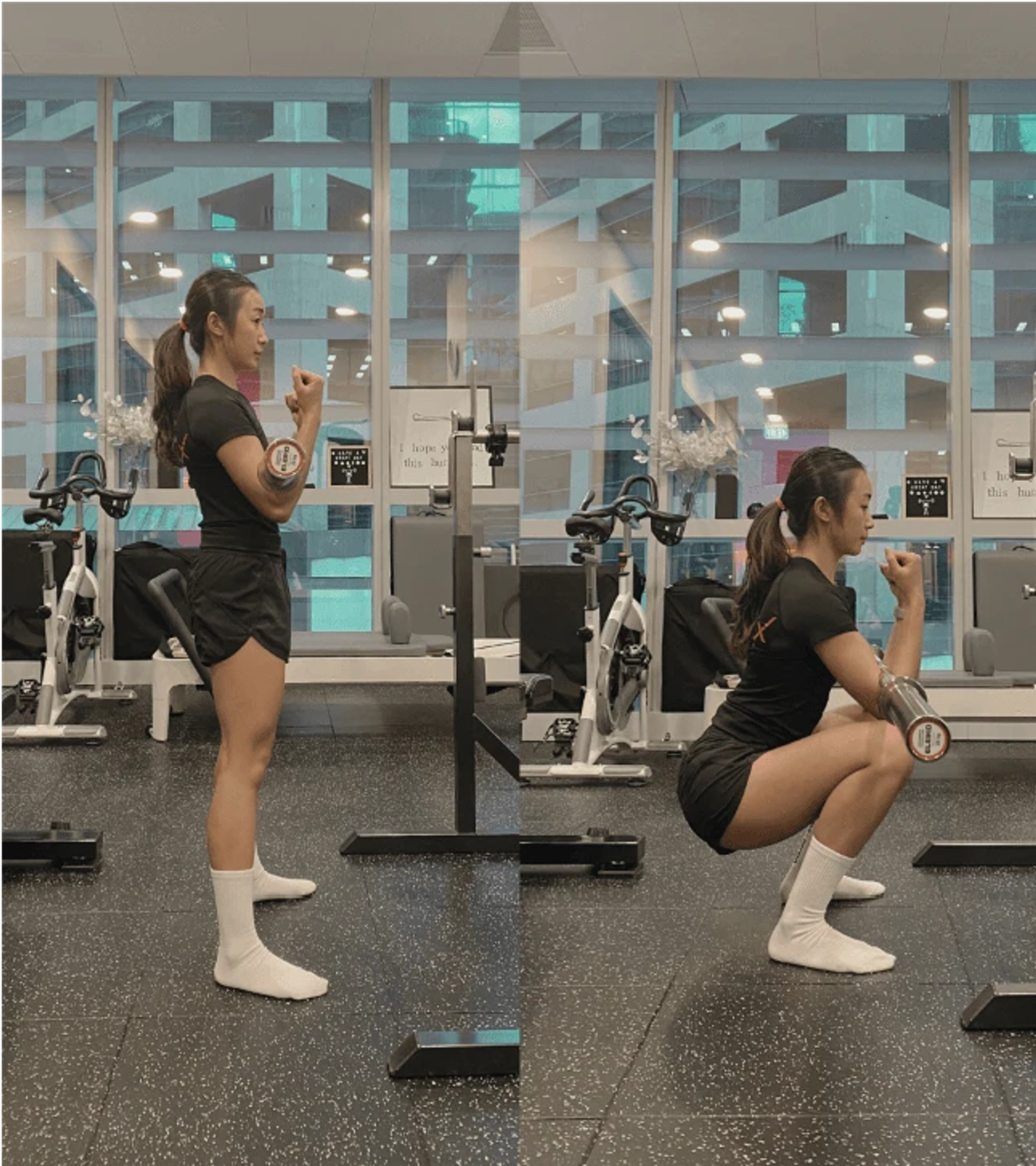
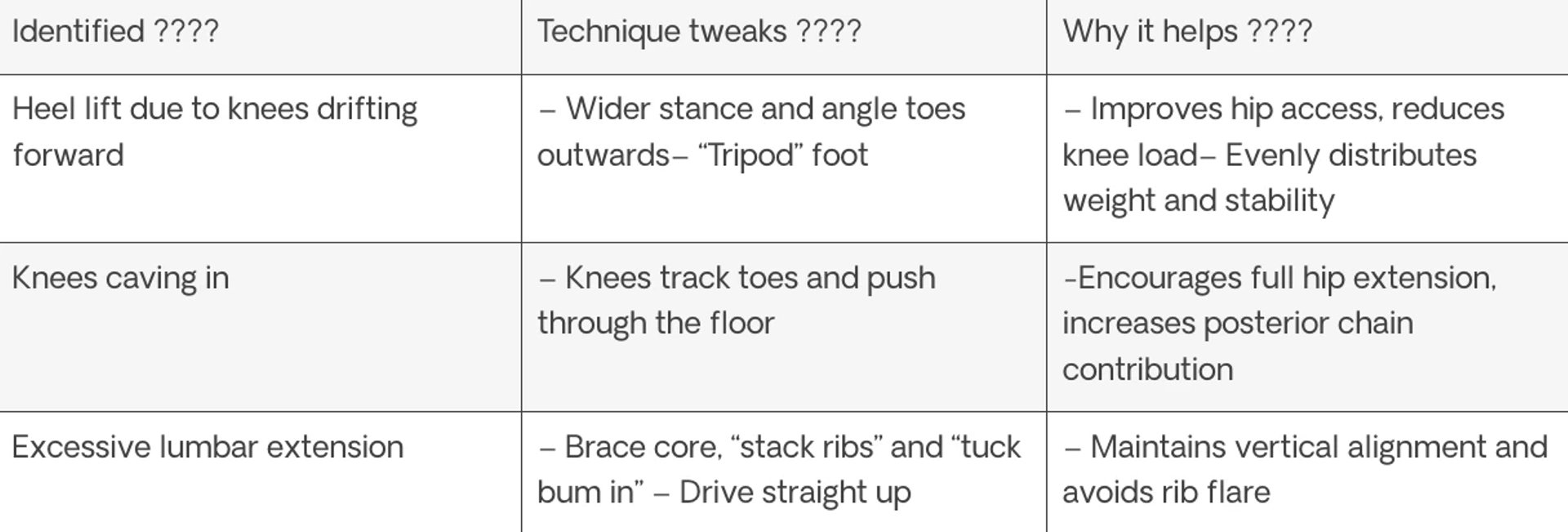
Technique tweaks
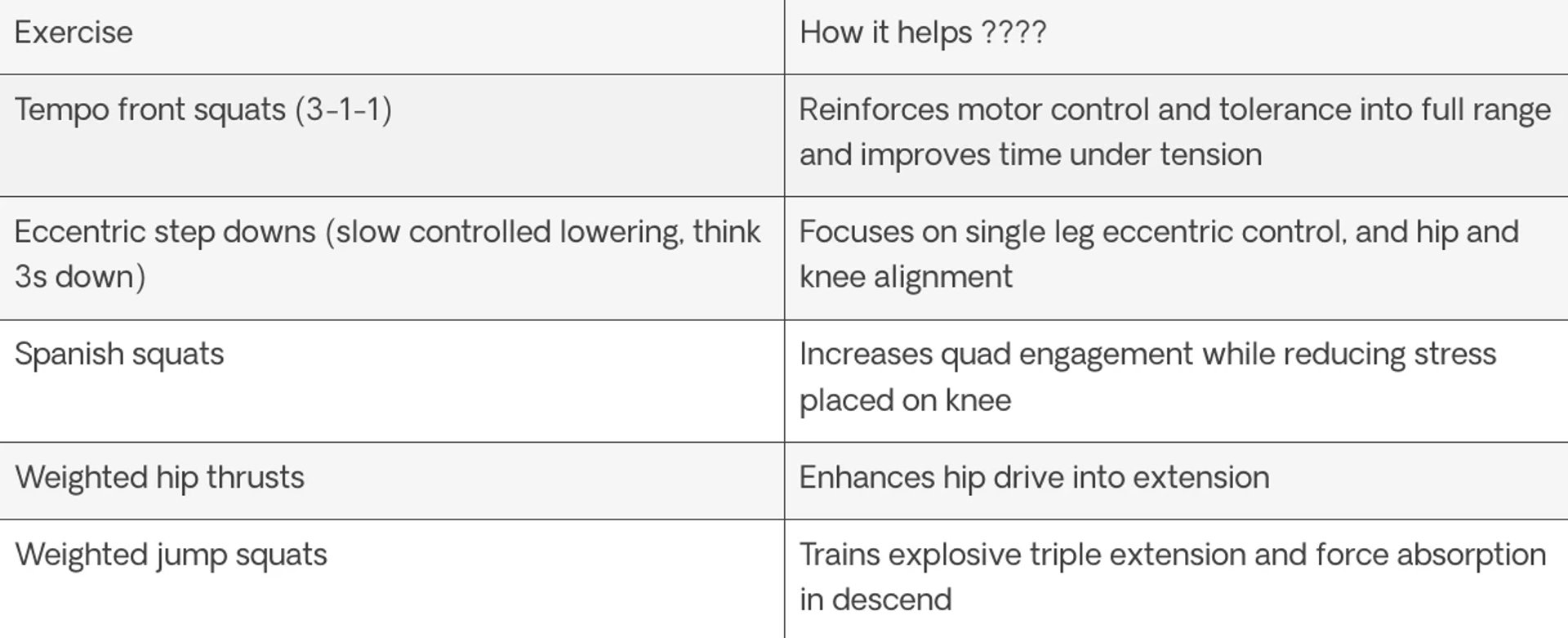
Accessory Exercises
Incorporate these into your routine 2-3x a week.
Goal is to build strength, control and tolerance in the muscles most involved with the movement pattern of wall balls while reducing stress onto knee.
Key takeaways
Wall balls are a demanding, quad-dominant movement under fatigue. By addressing mobility, strength, and movement control, wall balls can be optimized into a pain free and efficient movement that works with your body, even at rep 100!
References:
- Lima, Y. L., Ferreira, V. M. L. M., de Paula Lima, P. O., Bezerra, M. A., de Oliveira, R. R., & Almeida, G. P. L. (2018). The association of ankle dorsiflexion and dynamic knee valgus: A systematic review and meta-analysis. Physical therapy in sport : official journal of the Association of Chartered Physiotherapists in Sports Medicine, 29, 61–69. https://doi.org/10.1016/j.ptsp.2017.07.003
- Neto, W. K., Soares, E. G., Vieira, T. L., Aguiar, R., Chola, T. A., Sampaio, V. L., & Gama, E. F. (2020). Gluteus Maximus Activation during Common Strength and Hypertrophy Exercises: A Systematic Review. Journal of sports science & medicine, 19(1), 195–203.
- Gullett, Jonathan C; Tillman, Mark D; Gutierrez, Gregory M; Chow, John W. A Biomechanical Comparison of Back and Front Squats in Healthy Trained Individuals. Journal of Strength and Conditioning Research 23(1):p 284-292, January 2009. | DOI: 10.1519/JSC.0b013e31818546bb https://theprehabguys.com/how-to-prevent-knee-valgus/ https://e3rehab.com/the-truth-about-knee-valgus/