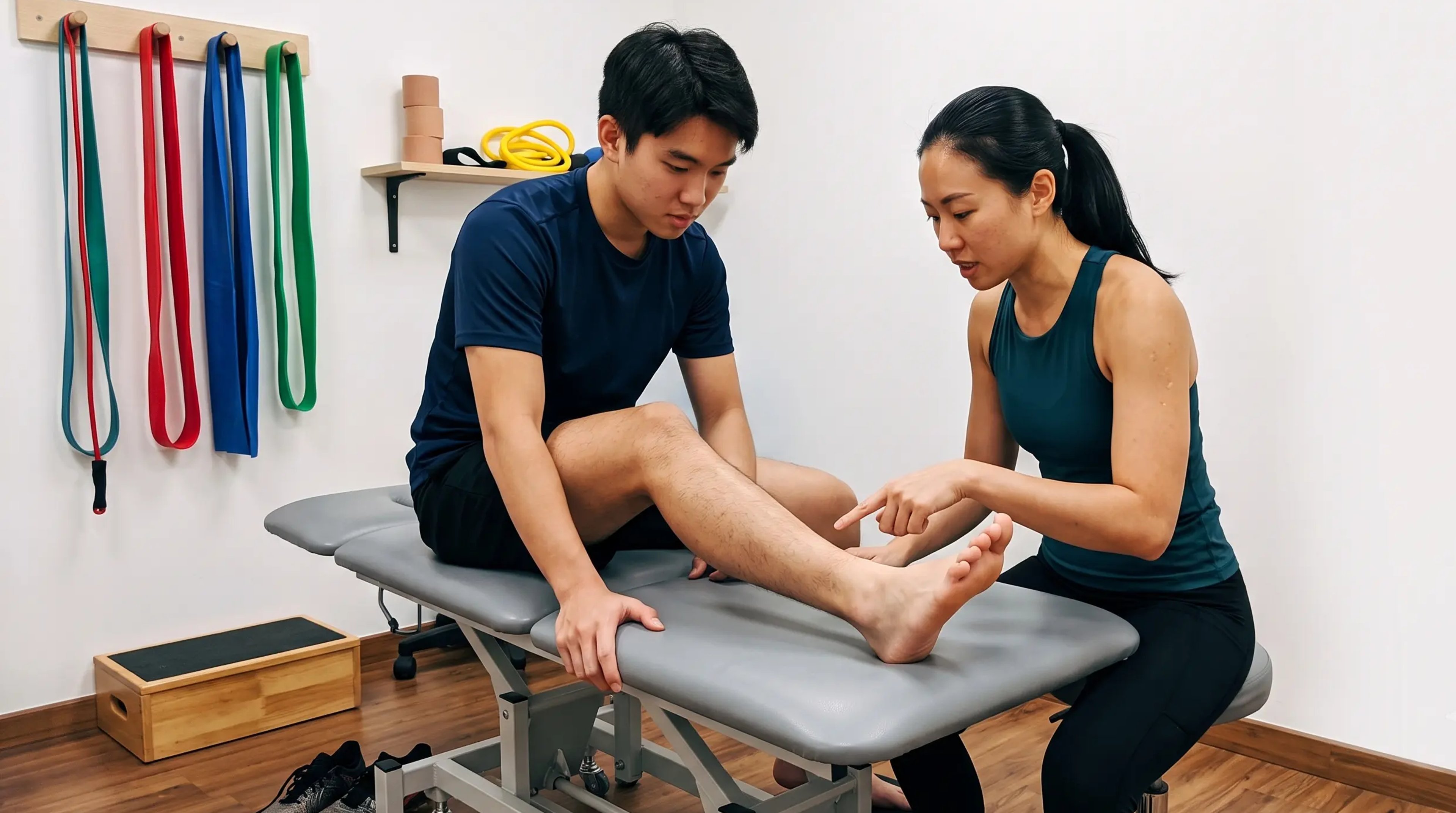

Ankle sprains are the most frequently reported injury in competitive athletes and make up over 12% of all reported injuries in adults, yet only around half the people who roll one ever have it looked at. The rest take their advice from the internet, which can also be full of contradictions: walk it off; rest it completely; ice it and wait.
If you rolled yours in the last few days and want to know what the week ahead should look like, this guide, written by our physiotherapist Ivan, lays out the order of operations. Here's what it covers: what happens when you roll your ankle, the 4 mistakes that slow recovery, whether it could be more than just a sprain, and the first-week plan from protection to reloading.
What Happens When You Roll Your Ankle
A lateral ankle sprain, the classic rolled or twisted ankle, happens when the joint twists beyond its normal range and the ligaments that support and stabilize it stretch or tear. The damage sets off the body's inflammatory response: blood flow to the injured area increases, and the ankle swells.
That swelling may look like damage, but it’s the extra blood flow the repair depends on, arriving exactly when the tissue needs it.
Swelling is the repair getting started, and the first days are about managing it rather than shutting it down.
4 Mistakes That Slow Ankle Sprain Recovery
All four turn up regularly at Activex Physio in Singapore: reaching for anti-inflammatories and nothing else, resting too long, stretching too hard, and stopping the moment the pain disappears. Two of them are also exact opposites.
1. Treating anti-inflammatories as the whole plan
When an ankle balloons, the first instinct for many people is to reach for an anti-inflammatory, and often nothing else. Inflammation is the body's first phase of healing, and the influx of chemicals into the injured tissue signals the repair phase to begin. Suppressing that early window with NSAIDs (Nonsteroidal Anti-Inflammatory Drugs) may impair long-term tissue regeneration.
Paracetamol is an effective alternative for pain. For the swelling, the umbrella review evidence grades cold packs, elevation and compression as similarly effective to one another (Gaddi et al., 2022), so the discomfort can be managed without switching the repair signal off.
2. Resting it for too long
Complete rest looks like the safe option, and plenty of athletes stretch it out: a full week off the foot, or a self-prescribed boot or guard worn well past its usefulness. Kept still, the joint stiffens and the muscles around it waste, while the scar tissue laid down in the meantime forms erratically, so the ankle comes out of the boot weaker and less steady than it went in.
Unless a fracture is in question, clinical practice guidelines put the start of optimal loading inside the first 24 to 48 hours, because loading in that window promotes healthy ligament healing (Martin et al., 2021). That means light mobility work, as written in the plan below.
Unless a fracture is in question, the ankle should start taking load again within 24 to 48 hours of the sprain.
3. Stretching it hard or testing it out
The opposite mistake is just as common. Some athletes force the ankle into deep inversion, point the toes hard to stretch the stiffness away, or hop on it to see whether it holds. A ligament is fragile during its first few days of healing, and pulling on it can lead to micro-tears along the fibers being repaired. Even once the ankle starts feeling better, pushing through pain prolongs the healing timeline, and differentiating between stiffness that needs moving from pain that needs leaving alone, is most of what matters in the first two weeks.
4. Stopping the moment it feels better
An ankle that no longer hurts on the walk to the train is not yet ready for running and jumping, let alone changing direction. Those movements involve far more than the ligament. The hip and knee above the ankle shape how the foot lands, the muscles through the whole leg absorb what the landing produces, and your balance and motor control decide whether any of it happens in time. Rehab that stops at the ankle leaves all of that untouched, and risk of subsequent sprains high.
Could It Be More Than Just a Sprain?
Usually it is a sprain. Pain and swelling are normal in the first days, and so is difficulty taking weight; mild sprains do well with conservative management. Some ankles deserve a closer look, though, because the same roll can produce a fracture or a high ankle sprain, and those are the differential diagnoses that need to be picked up early.
The quickest screen is the Ottawa Ankle Rules, a short checklist with a sensitivity of close to 100% for ruling out fracture (Bachmann et al., 2003). An ankle that clears it is almost certainly not broken. Get assessed if any of these apply; the diagram below marks the exact spots:
- Bone tenderness at the malleoli. Pressing along the back edge or tip of either malleolus, the bony knob on the outer or inner side of the ankle, produces sharp pain on the bone itself.
- Bone tenderness in the midfoot. The pain sits at the base of the fifth metatarsal on the outer edge of the foot, or over the navicular on the inner arch.
- You cannot take weight on it. Both right after the injury and when you try now.
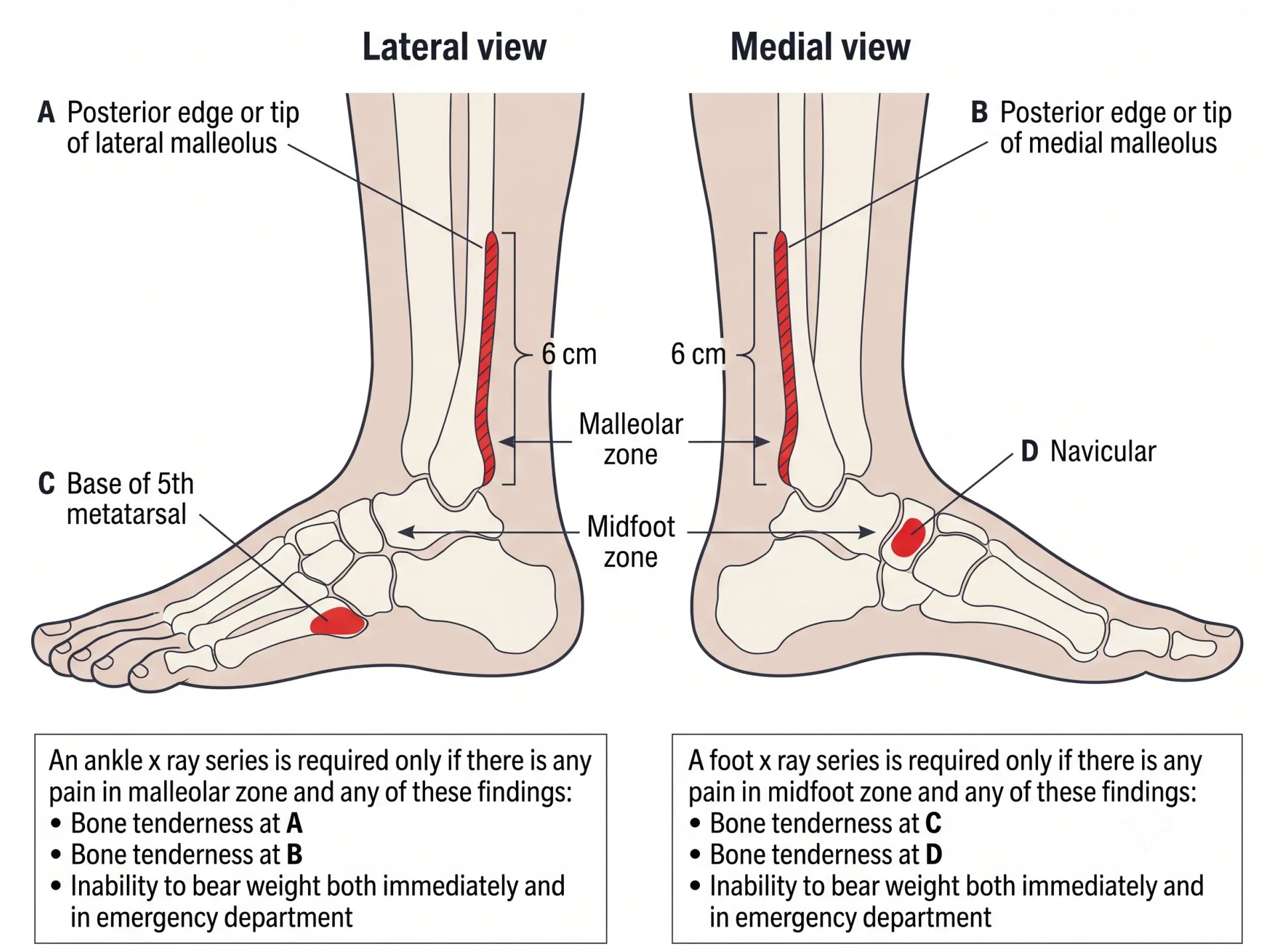
One more sits outside the checklist: pain and swelling that have not improved after a week of appropriate management. By that point, get the ankle looked at properly.
The First-Week Plan: Protect, Then Reload
The first week runs in two phases: protect and settle while the swelling is climbing, then restore movement and loading as it comes down. What you’ll need: a resistance band and a tennis ball. The phases are tied to the swelling rather than to a calendar date.
The first 24 to 48 hours: protect and settle
The first step in managing an acute ankle sprain is to protect it and let the swelling settle. Five things do that:
- Avoid aggravating movements. If a movement provokes the pain, it is off the menu for now.
- Ice and compress the ankle. Both manage the swelling and take the edge off the pain.
- Elevate it through the day. Around 20 minutes every 2 hours works well.
- Keep it moving lightly. Gentle mobility work such as ankle pumps and seated heel raises improves blood circulation through the area without loading the ligament.
- Use an aid if you need one. A brace or crutches, to keep from overloading the ankle while it settles.
Once the swelling settles: restore motion, then reload
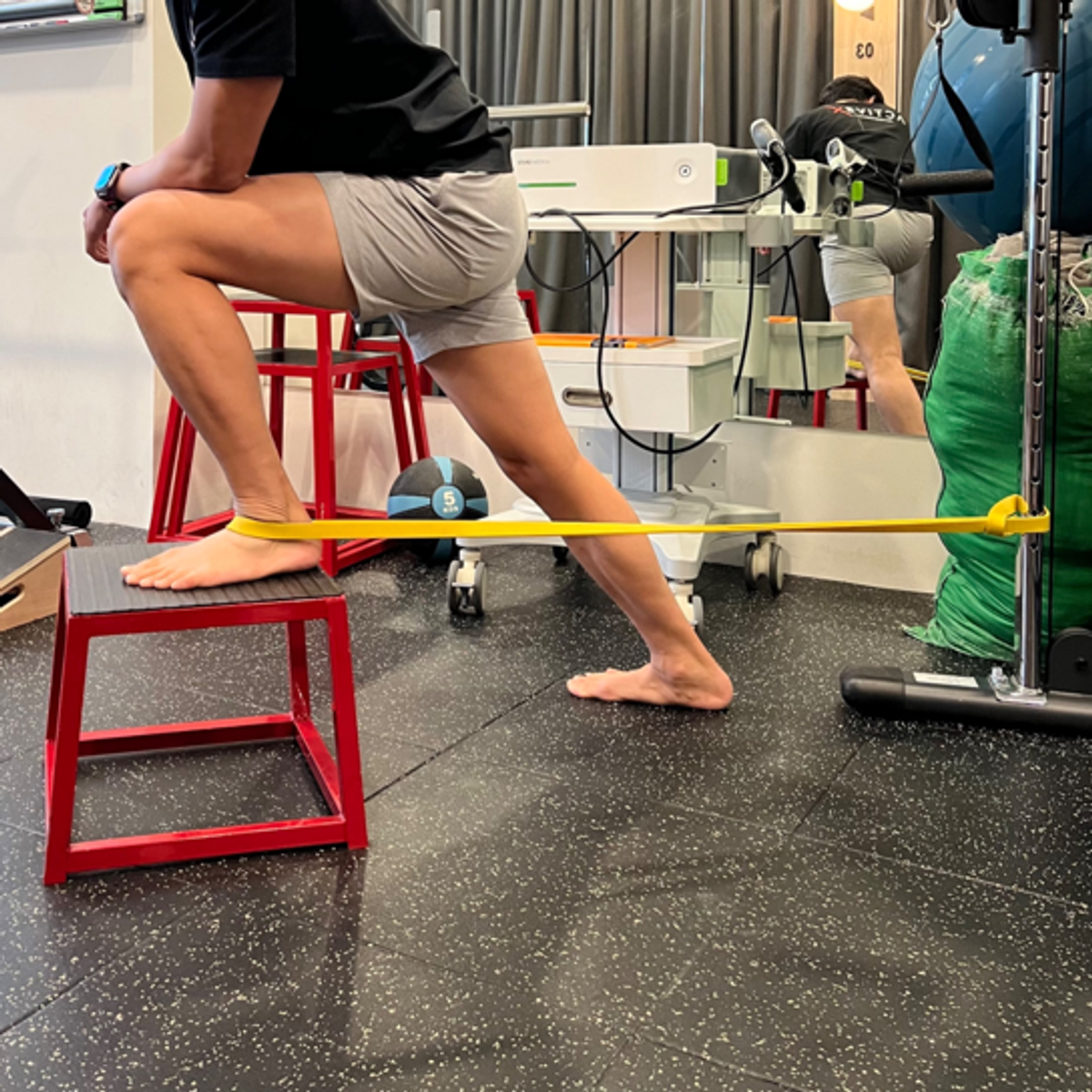
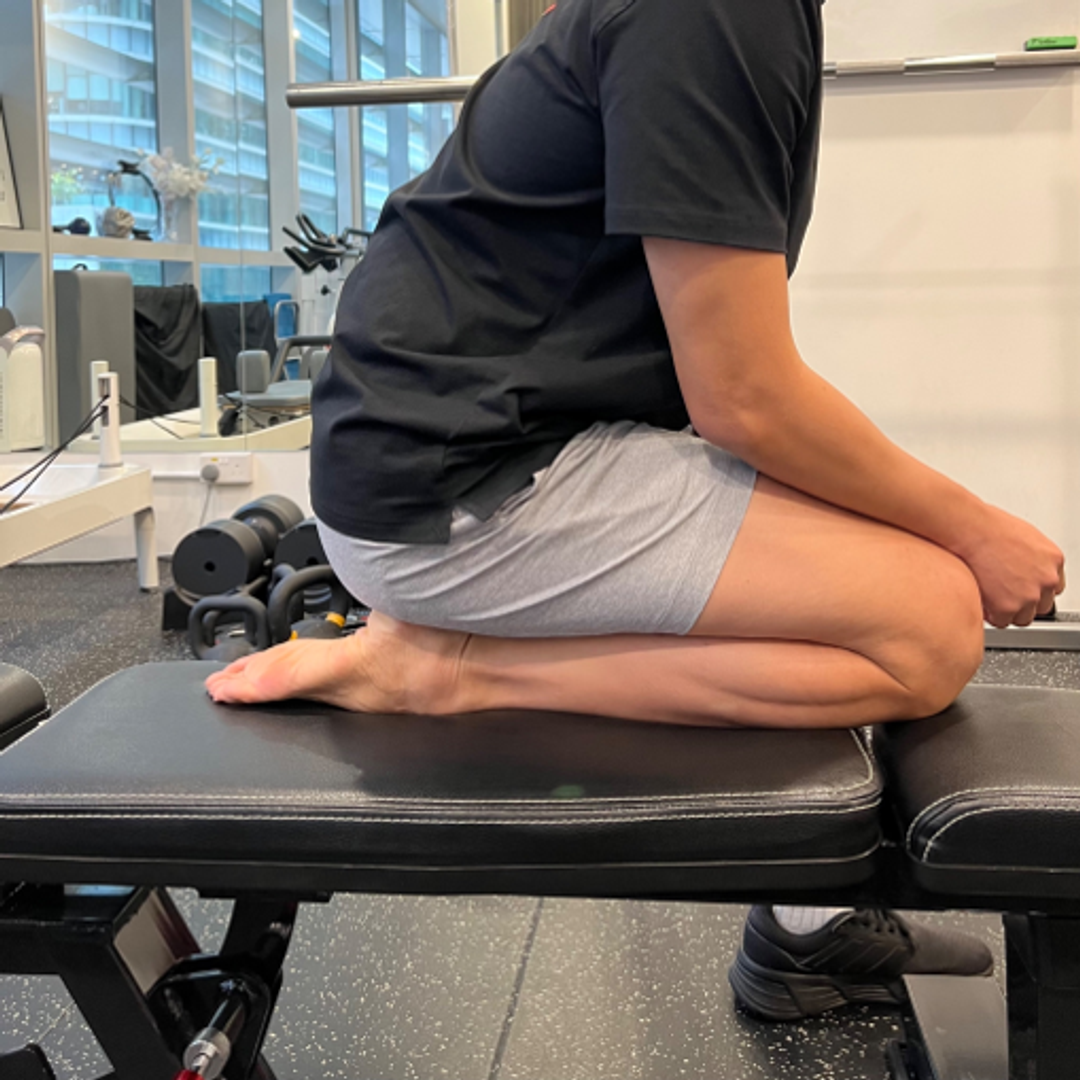
From here, further resting and offloading stop being useful. As the swelling subsides, scarring around the joint stiffens it and the job flips from protecting the ankle to moving it. Mobility comes first, and each drill from here is pictured.
- Banded ankle dorsiflexion. Working the ankle into its upward bend, toes drawn toward the shin, against band resistance.
- Plantarflexion in single-leg Japanese sitting. Sitting back over one pointed foot to take the ankle into its downward range. When to start this one is your physio's call and depends on how severe the sprain was.
Then comes reloading, as the ankle tolerates it. These start later and progress under your physio's guidance.
- Banded inversion and eversion. Turning the sole inward and outward against band resistance.
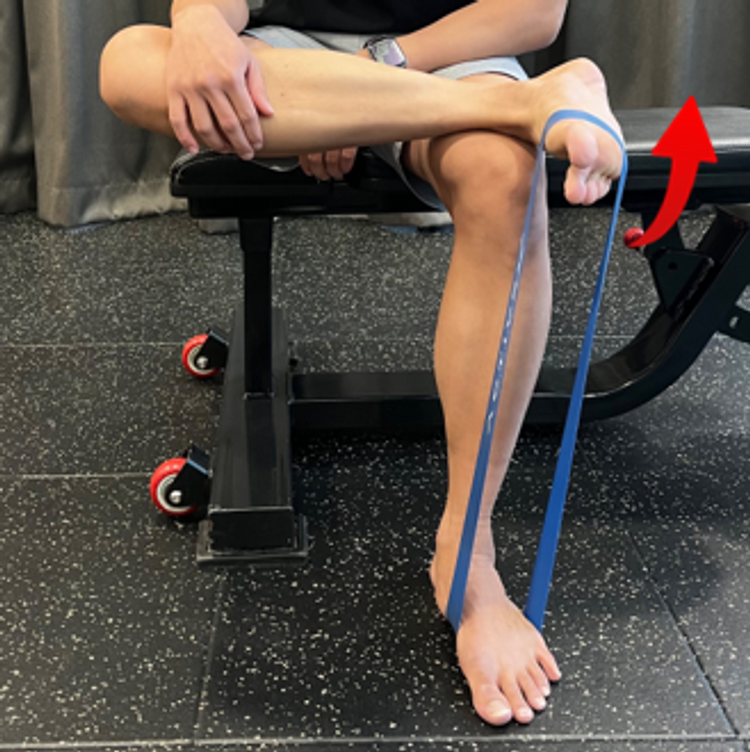
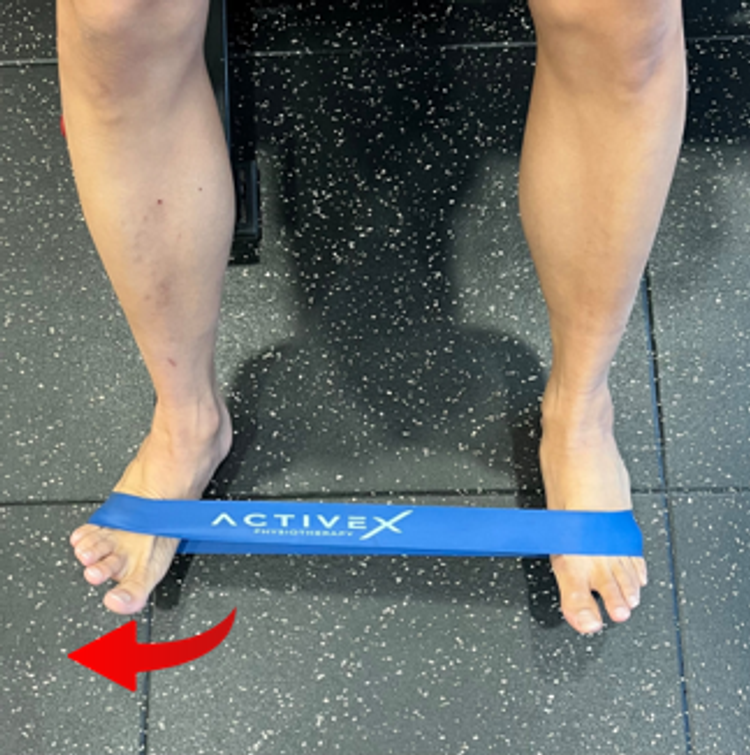
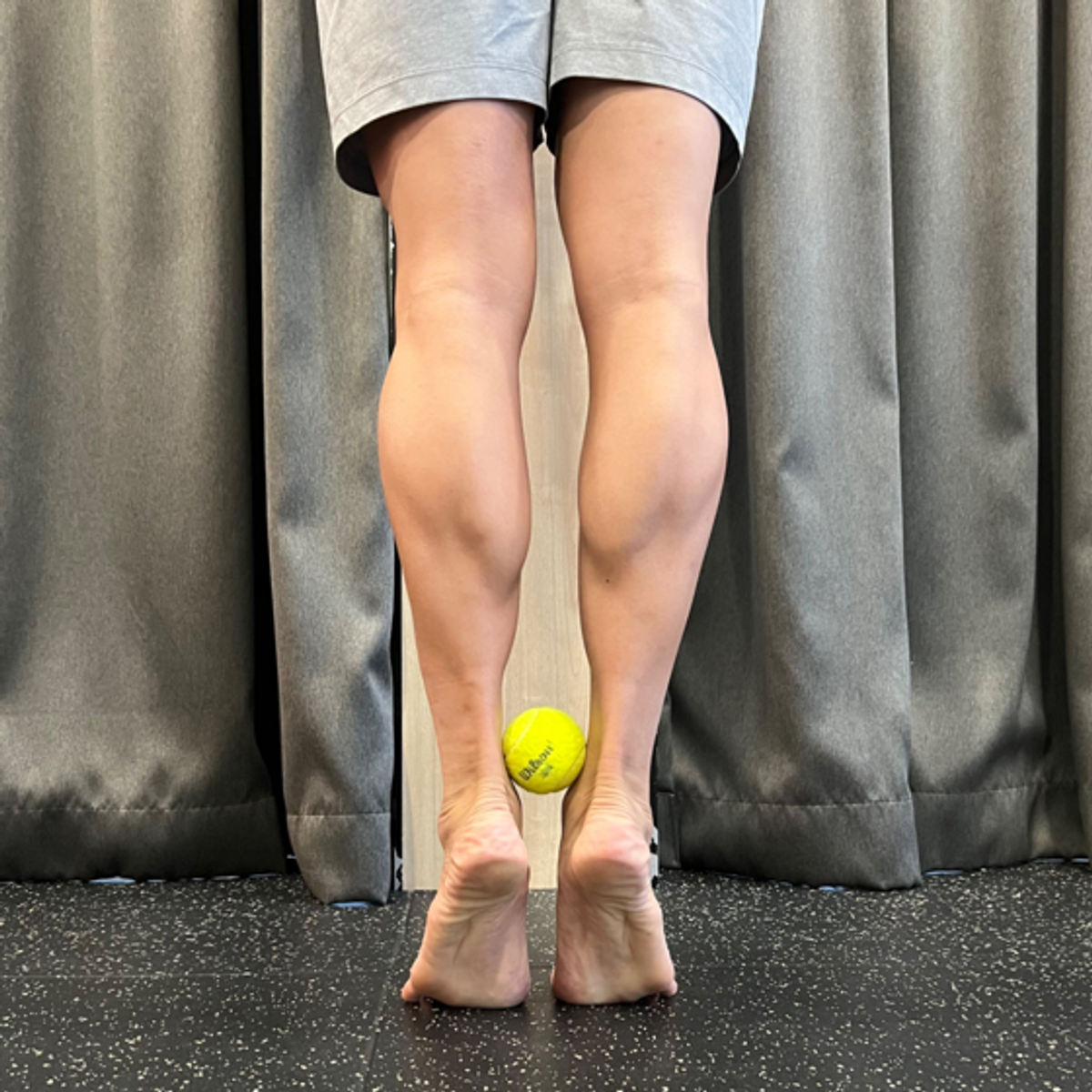
- Heel raises with a tennis ball. Rising onto the toes with a tennis ball held between the heels.
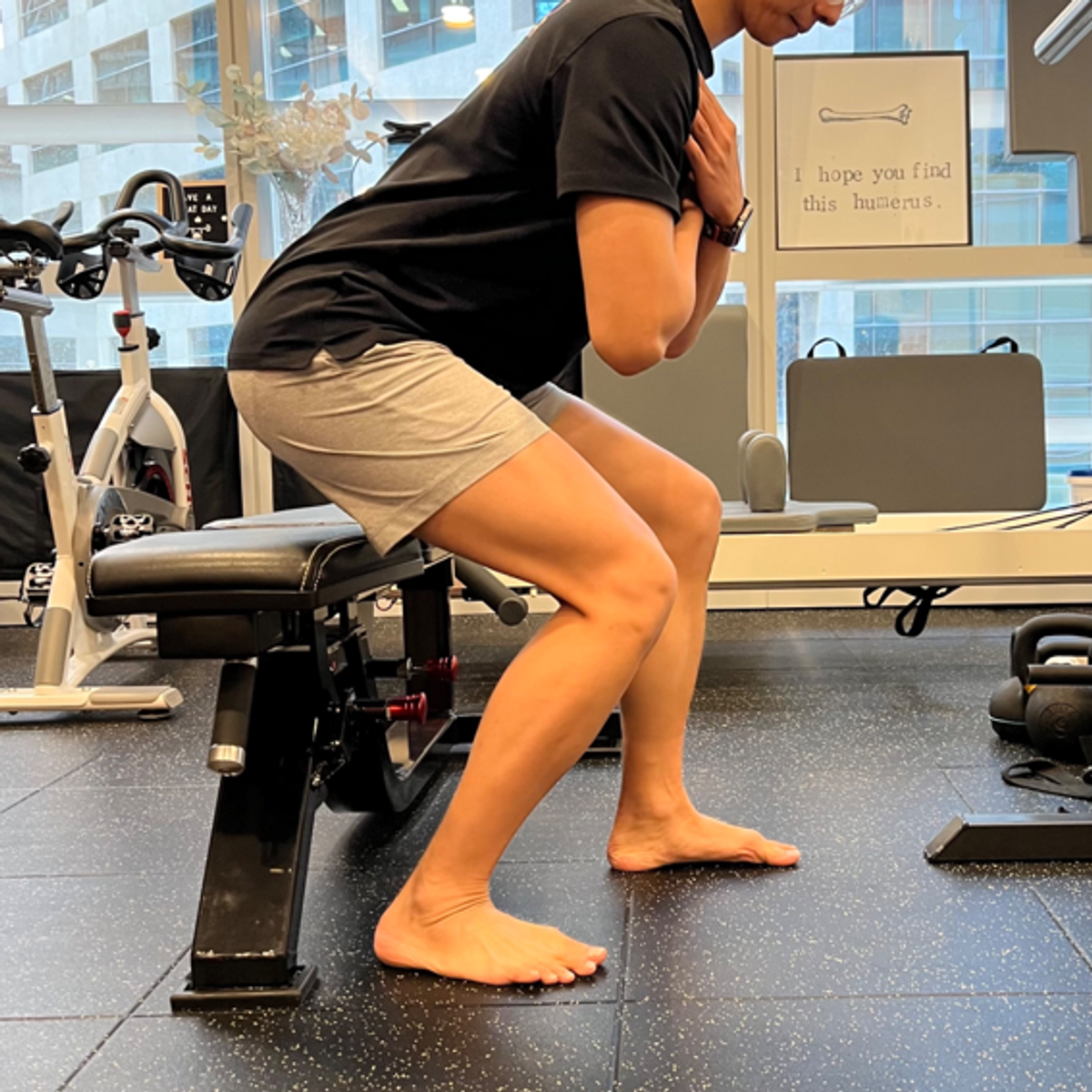
- Biased squats. A squat set up to put more of the load through the recovering leg.
Pain-free light cardio helps here too. Stationary cycling or the elliptical raises blood flow through the healing tissue without impact.
The Bottom Line
The first few days set the stage for how the recovery plays out. Manage the pain and swelling, and restore as much mobility as the ankle tolerates. Take the red flags seriously: bone tenderness, an ankle that will not take weight, a week without improvement. Any of the three warrants an assessment.
If you have been sitting in the rest-and-wait camp, start today with the elevation routine and the light mobility work, and let the swelling set the pace.
Now, before you grab your boots and make for the door, keep in mind that healing is not the same as being ready for sport. Part 2 covers why ankle sprains turn into repeat sprains, and how to get your ankle ready for return to running, jumping and changing direction. For a quick screen on whether physio can help with your ankle, our ankle sprain page covers it in two minutes.
If you want eyes on your ankle and a clear picture of where it sits in the healing process, you can book in with Ivan from our pricing page here.
References
Bachmann, L.M. et al. (2003) 'Accuracy of Ottawa ankle rules to exclude fractures of the ankle and mid-foot: systematic review', BMJ, 326(7386), p. 417. doi:10.1136/bmj.326.7386.417
Gaddi, D. et al. (2022) 'Acute ankle sprain management: an umbrella review of systematic reviews', Frontiers in Medicine, 9, 868474. doi:10.3389/fmed.2022.868474
Martin, R.L. et al. (2021) 'Ankle stability and movement coordination impairments: lateral ankle ligament sprains revision 2021: clinical practice guidelines linked to the International Classification of Functioning, Disability and Health from the Academy of Orthopaedic Physical Therapy of the American Physical Therapy Association', Journal of Orthopaedic and Sports Physical Therapy, 51(4), pp. CPG1-CPG80. doi:10.2519/jospt.2021.0302
Written by Ivan Tam | Musculoskeletal Physiotherapist, Activex Physio Singapore